 Antigua Guatemala City Guide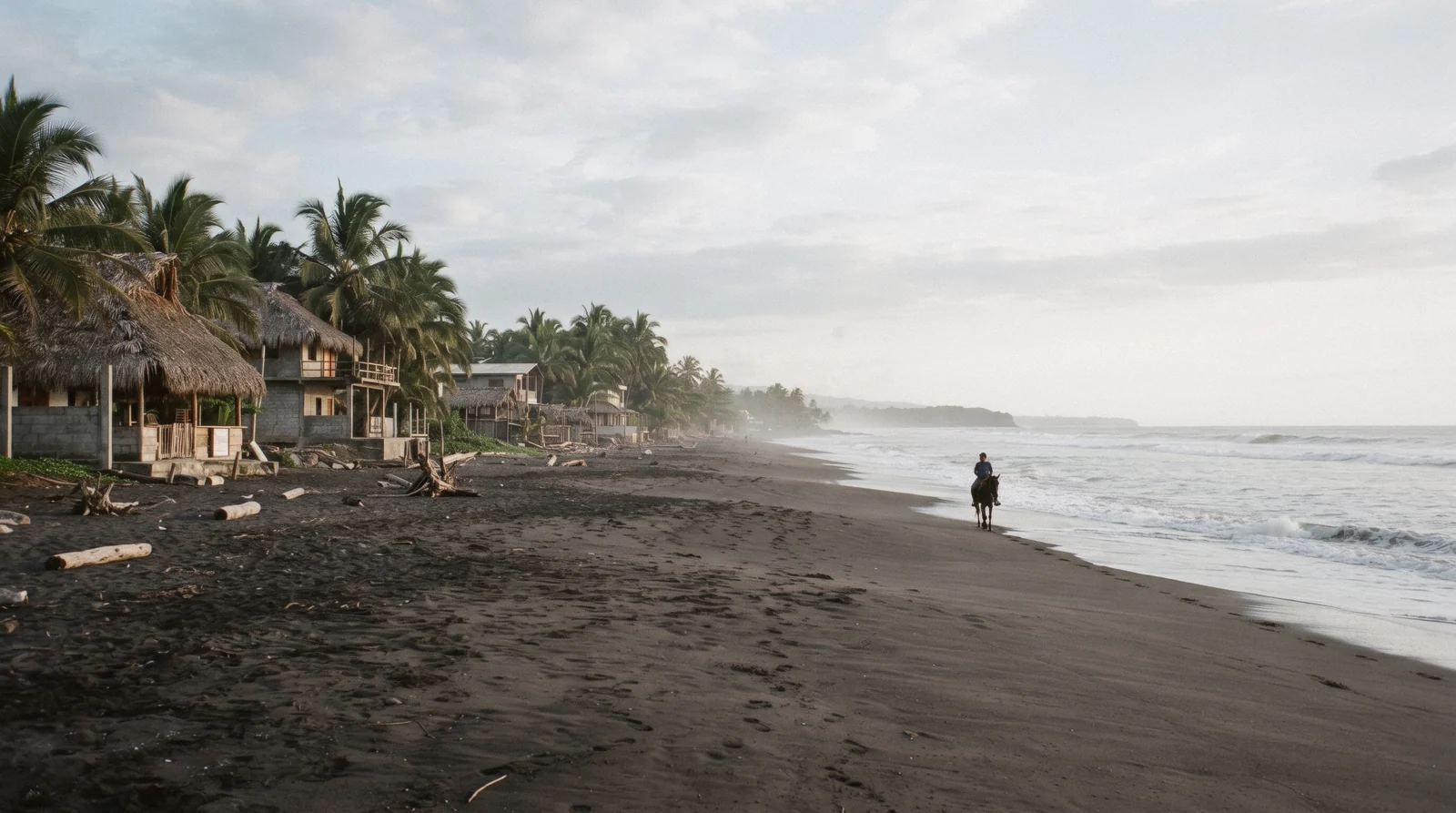
Monterrico
Monterrico, Guatemala's black-sand Pacific beach town, sits inside a university-run reserve on the Canal de Chiquimulilla, and sea-turtle season runs July to December. Almost no transport price for getting there is published anywhere, which makes the one priced day tour the practical option for most visitors. Start from the Antigua Guatemala travel guide, see the cost table, or browse the day-trip shortlist.
Quick answer What it is, turtle season, the only published price, how the day runs
Monterrico is a village of about 1,000 people on Guatemala's Pacific coast in Santa Rosa department, known for volcanic black sand and sea turtles, inside the 2,800-hectare Reserva Natural de Usos Múltiples Monterrico on the Canal de Chiquimulilla. The reserve is run by CECON, the science institute of USAC, the country's public university, opens every day 07:00 to 17:00, and sea-turtle nesting season runs July to December.
Key takeaways
- The $120 day tour from Antigua is the only published door-to-door price, transport and day pass included. No operator publishes a shuttle or boat fare, so DIY cannot be costed in advance. See Authentic experience in Monterrico.
- Nesting runs July to December, and the hatchery is stocked under a supervised agreement that donates 20 percent of each nest. Read the turtle season.
- This is a coast-and-turtles day, not a volcano or ruins day, and the honest alternative days sit on the day-trip shortlist.
Key facts
Opening hours
| Reserve, Monday to Sunday (CECON) | 07:00–17:00 |
|---|
Closed None stated. CECON lists the reserve open every day of the week
Admission
- Adult
- The reserve tariff is not published by CECON. The priced product is the $120 day tour from Antigua with transport and day pass included, and Turansa lists a private transfer at $180 per trip for up to 10 passengers
Planning it
- Time needed
- 10 hours door to door on the day tour. An overnight on the coast gives two half-days
- Book ahead
- Recommended — a few days
- Address
- Monterrico, Santa Rosa, on Guatemala's Pacific coast inside the Reserva Natural de Usos Múltiples Monterrico, on the Canal de Chiquimulilla
What a day at Monterrico costs
Three ways to do Monterrico, priced from the operator's and CECON's own pages. The reserve tariff, the lancha fare and the turtle-release price are all unpublished, so those lines stay empty rather than guessed.
Do you want the coast handled door to door, or run on your own schedule? One platform tour prices the whole day at $120, one operator publishes a private transfer, and no shuttle or boat fare is published anywhere, so a do-it-yourself day cannot be costed in advance.
| Option | Price | Includes | Cancel | Book |
|---|---|---|---|---|
| Reserve entry at the CECON gateThe reserve itself, if you arrive under your own steam. Most visitors come in on a tour or transfer | Access to the reserve from 07:00 to 17:00, the turtle hatchery and the mangrove docks. CECON publishes hours and season but no tariff, so the amount is only known at the gate | Not stated as refundable | Official site | |
| Private transfer Antigua to Monterrico, TuransaGroups up to ten who want their own schedule and an overnight on the coast | $180 per trip, 1 to 10 passengers | Private van both ways on your own timetable. The operator states the rate is not valid Holy Week, in August, or at New Year's Eve | Operator terms apply, listed on the Turansa page | Official site |
| Authentic experience in Monterrico from Antigua, Guate Tours by NelsonThe default one-day answer. Everything is arranged, priced and cancelled in one place | Listed $120 | Round-trip transport from Antigua plus the day pass, booked as 10 hours door to door, live guide in English or Spanish | Full refund if you cancel at least 24 hours before | Check Availability |
CECON and Turansa figures come from their own pages, the tour from its listing, read in Q3 2026.
Monterrico tours compared
The card links to the operator's listing, where the live calendar shows what still has space for your date. Price in USD as listed.
 from $120
Authentic experience in Monterrico. From Antigua
Monterrico black-sand beach and turtle bicheiro day pass from Antigua, transport and day pass included.
Check AvailabilityPrices, ratings and details are the platform's own. dollar figures are the listed prices — the platform bills in your account's currency.
What kind of beach Monterrico is
The sand is black volcanic, the surf is Pacific, and the town is a working village of about 1,000 people that doubles as a weekend beach resort for Guatemala City (Wikipedia, fetched for this page). Do not picture white Caribbean sand or a calm cove. This is a wide, open-coast beach with real waves, and swimming is a judgement call rather than a lounge-in-the-shallows affair. The town itself is low-rise and laid-back, a strip of small hotels and seafood places rather than a resort strip.
The beach sits inside the Reserva Natural de Usos Múltiples Monterrico, 2,800 hectares of which about 65 percent is water, on the Canal de Chiquimulilla, holding more than 110 resident and migratory bird species, all counted on CECON's own page. That water share changes what the day is: the mangrove boat trip, the Paseo por los Manglares, is run by local residents and community guides and is closer to the reserve's core experience than an optional add-on. You drift the canal, watch herons and mangrove forest, and understand why the boats leave from docks a short walk from the beach.
Set expectations honestly. This is not a swim-all-day destination. It is a nature reserve with a big village beach attached, best combined with the hatchery, a boat trip and a long walk on dark sand. If you want in-town contrast, the calmer options are on our things to do page.
The turtle season at Monterrico
Sea-turtle nesting at Monterrico runs July to December of each year, in CECON's own wording on the reserve page. In that window the beach is a breeding ground for four species of sea turtles, and the hatchery on the sand becomes the town's main event. The eggs are what the whole local system turns around.
The system works like this. Under a supervised agreement between egg collectors and the hatchery, overseen by CONAP and CECON, collectors donate 20 percent of each nest to the hatchery. That donation is why hatchlings can be seen there in season, and why visitors can take part in releases at the hatchery. The price of taking part is not published. Community figures of Q15 to Q25 per released turtle circulate, quetzal only, and none is citable, so treat any number you hear as negotiable and on the day.
The honest counterpoint, from the Wikipedia article fetched for this page, is that the majority of eggs laid on the beach are still harvested and eaten. The donation system protects a share of nests, not the species whole. Egg collectors work an August-to-November rhythm per Wikipedia, which is the heart of the harvest and also the heart of the hatchery's supply. For the wider question of when to come, the seasonal logic sits on our best time to visit page. If releasing a hatchling is the reason for the trip, time it inside July to December and go early in the day, since the reserve's gates shut at 17:00.
How much time to give Monterrico
Three real routings. The tour's 10 hours is its own booking, the overnight is the private-transfer shape, and the DIY day is named in the tour listing's own alternative line.
The day tour is the fixed shape, 10 hours booked door to door, so the beach window is set once you commit. An overnight turns the same transfer into two half-days, and is the version the private transfer exists for. No source publishes a drive time, so no routing below claims one.
The priced options are compared in the cost table.
| Routing | Shape | On the coast | Skips / adds |
|---|---|---|---|
| Day tour from Antigua | about 10 hours door to door | Beach hours, the hatchery and a mangrove boat trip inside the reserve's 07:00 to 17:00 window | The only priced door-to-door option, listed $120 |
| Private transfer with an overnight | about two days | Two beach half-days, sunset on the sand, early hours on the canal | The $180 Turansa van seats up to 10, so a group splits it |
| Shuttle plus public lancha, DIY | a full day each way | The two-leg route the tour listing itself names as the alternative | No published fare for either leg, so the budget is unknown until you stand at the dock |
What the day costs line by line
Every line of a Monterrico day with its published status. Where nobody publishes a figure, the line says so instead of a number.
The published money on this day is transport. Once at the reserve the unpublished lines begin, the entry tariff, the boat, the release, and they are all settled in cash on the day, so carry small quetzal notes. For Antigua-side cash context, see our costs page.
| Line of the day | Cost | Status |
|---|---|---|
| Door-to-door day tour | listed $120 per person | Published on the listing, transport and day pass included |
| Private transfer both ways | $180 per trip, up to 10 passengers | Published on Turansa's own page, split between the group |
| Reserve entry | CECON publishes hours but no tariff, so the amount is only known at the gate | |
| Mangrove boat trip | Run by community guides, no published fare | |
| Turtle release at the hatchery | No published price. Community figures of Q15 to Q25 circulate and none is citable |
The turtle year at Monterrico
The season as the sources give it, month by month, plus the daily clock the reserve keeps all year.
-
July
Nesting season opens
CECON's own page: nesting runs 'from July to December of each year' (cecon-ccqqfar.usac.edu.gt)
-
August to November
The egg-collector season
The Wikipedia article fetched for this page describes locals harvesting eggs through an August to November season
-
All season
One fifth of every nest goes to the hatchery
The supervised egg-collector agreement donates 20 percent of each nest, overseen by CONAP and CECON (CECON's page)
-
Every day, 07:00
The reserve opens
Monday to Sunday, 07:00 to 17:00 (CECON's page)
-
Every day, 17:00
The reserve closes
Outside these hours the hatchery and docks are shut (CECON's page)
-
December
Nesting season closes
The season end of the July to December window (CECON's page)
-
January to June
The quiet half of the year
No nesting, unchanged hours, and the canal's more than 110 resident and migratory bird species stay the steady draw (CECON's page)
Sources: CECON-USAC reserve page (hours, season, 20 percent agreement, bird count, read for this page) and the English Wikipedia article on Monterrico, fetched for this page.
Do and don't in Monterrico
Do
- Carry small quetzal notes, since the entry tariff, the boat and the release are all settled in cash on the day
- Time the trip for July to December if hatchlings are the point of going
- Arrive inside the 07:00 to 17:00 reserve window, because the hatchery and docks close with it
- Book the day tour or transfer ahead, since there is no published walk-up alternative
- Pack sun protection and more water than an Antigua day, this is humid lowland coast
Don't
- Do not treat the Pacific surf as a calm swim, it is a wide open-coast beach
- Do not budget the two-leg DIY route in advance, neither leg has a published fare
- Do not hand over money for a release without asking what it covers, no price is published
- Do not plan a quick half-day, the tour books 10 hours door to door
- Do not expect quiet sand on a Sunday, the capital arrives at weekends
Distilled from the CECON reserve page, the tour listing and the town's own coverage.
Five things most visitors do not know
Details that change how the day goes, each with its source. The money lines live in the cost table, the routes on the day-trip shortlist.
- The reserve is run by a university science institute, CECON of USAC, not by a park service (source: cecon-ccqqfar.usac.edu.gt, read for this page).
- The hatchery is stocked by donation, egg collectors hand over 20 percent of each nest under a CONAP and CECON supervised agreement (source: CECON reserve page).
- Most eggs laid on the beach are still harvested and eaten, the donation system is what keeps a share of nests safe (source: Wikipedia article on Monterrico, fetched for this page).
- No shuttle operator publishes an Antigua fare for Monterrico, we checked every seller we could reach, and the tour listing itself names the shuttle to La Avellana plus the public lancha as its alternative route (source: shuttle-seller checks in facts-pack-2 and the tour listing).
- About 65 percent of the 2,800-hectare reserve is water, so the canal boat is not an extra, it is most of the reserve (source: CECON reserve page).
Getting to Monterrico from Antigua
Start with what we confirmed by checking every shuttle seller we could reach: no operator publishes an Antigua to Monterrico fare. That makes the transport decision for you, because a do-it-yourself day cannot be costed before you go.
Three working shapes exist. First, the $120 platform day tour, which books 10 hours door to door and bundles the day pass, the only priced door-to-door answer. Second, the $180 Turansa private van, up to 10 passengers, with the operator's own caveat that its rates are not valid Holy Week, in August, or at New Year's Eve, which makes sense for a group splitting the cost and staying a night. Third, the two-leg DIY route, a shuttle toward the coast plus the public lancha across the estuary, which the tour listing itself names as the alternative, a shuttle to La Avellana plus the boat, but whose fares are unpublished on both legs.
Timing has one hard edge. The reserve gate runs 07:00 to 17:00 daily, so a late arrival loses the hatchery and the mangrove docks even if the sand stays open. Since the tour books 10 hours door to door, the coastal window is fixed from the moment of booking, and there is no drive time published by any source to plan an independent arrival against. The wider route family sits on the day-trips page, and how Antigua departures work in general is covered on getting around.
Monterrico map: the village and the capital
The village pin sits on the coast inside the reserve. Antigua, where every tour and transfer starts, is up in the highlands.
Next stop after the black sand
Distances are given only where a source publishes them. These are the pairing decisions.
Lake Atitlán
The classic highland-water day, $20-25 each way by shuttle on the Lake Atitlán page, pairs with a coast day to cover both Guatemalas.
the other full dayPacaya volcano
The half-day volcano that is actually open while Fuego and Acatenango stay suspended, the other easy yes from Antigua.
the open volcanoVolcán de Agua
The cone that frames every Antigua rooftop photo, and what nobody officially publishes about climbing it.
the skyline coneTikal
The Maya city that deserves two days and a Flores night, not a bolt-on to a beach week.
its own tripMore day trips
The full day-trip shortlist with shuttle times and honest costs, including the ones nobody prices.
the shortlistMonterrico questions
Is Monterrico worth visiting?
Yes if the point is a wild black-sand coast and turtles, no if you want calm swimming or resort sand. The season decides half of it, since nesting runs July to December and the hatchery only has hatchlings then. Read the turtle season or our best time to visit framing before committing the day.
When is turtle season in Monterrico?
Nesting runs July to December per CECON's own reserve page. Egg collectors work an August to November rhythm per the town's coverage, and hatchlings are seen at the hatchery under the 20 percent nest donation. Full detail at the turtle season.
How do you get to Monterrico from Antigua?
Three shapes: the $120 day tour, the $180 private van for up to 10, and the two-leg DIY route whose fares are unpublished on both legs. No drive time is published by any source, which is why the priced tour dominates. Numbers side by side in the cost table.
How much does it cost to enter the Monterrico reserve?
CECON publishes hours, 07:00 to 17:00 daily, but no tariff, so the amount is only known at the gate. Carry small quetzal notes, because the mangrove boat and the turtle release are also settled in cash on the day. Cash context for the region is on our costs page.
Can you release baby turtles in Monterrico?
Yes, releases happen at the hatchery in season. The taking-part price is not published, and community figures of Q15 to Q25 per released turtle circulate, quetzal only, none of them citable. The season logic is at the turtle season.
Is Monterrico safe?
Nothing we checked names Monterrico specifically, so the general Guatemala framing applies: watch money and valuables, keep nights short and planned, and use the standard transport rules. Our safety and scams page covers the practices that work in Antigua and transfer to the coast.
Where Monterrico fits in a trip
A first-timer's Antigua week, laid out in the Antigua Guatemala travel guide, gives the coast one full day, best placed after the town days when the legs want a flat one. The turtle season pushes that day into July to December if hatchlings are the draw, though the beach and canal work all year. Pairing logic is simple: a volcano day and a lake day cover the highlands, the coast covers the Pacific, and the honest alternative days sit on the day-trip shortlist.
If the trip is short, the tour's 10-hour shape is the only way the coast fits at all, since nothing else on this route is priced or scheduled. Holy Week visitors should book early, when the capital empties onto these beaches and the Turansa rate itself is suspended.
Monterrico on film
Three looks at the black sand, the town and the coast road, unedited enough to plan with.
Playa de Monterrico, Guatemala (4K)
A straight walk of the beach itself, black sand and surf, the honest preview.
Video: Gabriel Por El MundoMonterrico, Guatemala | Our Final Days
A couple's stay on the coast, the town streets and the slow rhythm of the place.
Video: Travel With TatsGuatemala's Pacific Coast: Why I skipped Monterrico and what I recommend
The counter-argument to the beach day, kept in so you can judge both sides.
Video: First Step TravelersVideos load from YouTube only when you press play.
Prices, hours and terms are set by the venue or operator and confirmed at checkout.
We may earn a commission if you book through one of our links, at no extra cost to you. Full affiliate disclosure