 Antigua Guatemala City Guide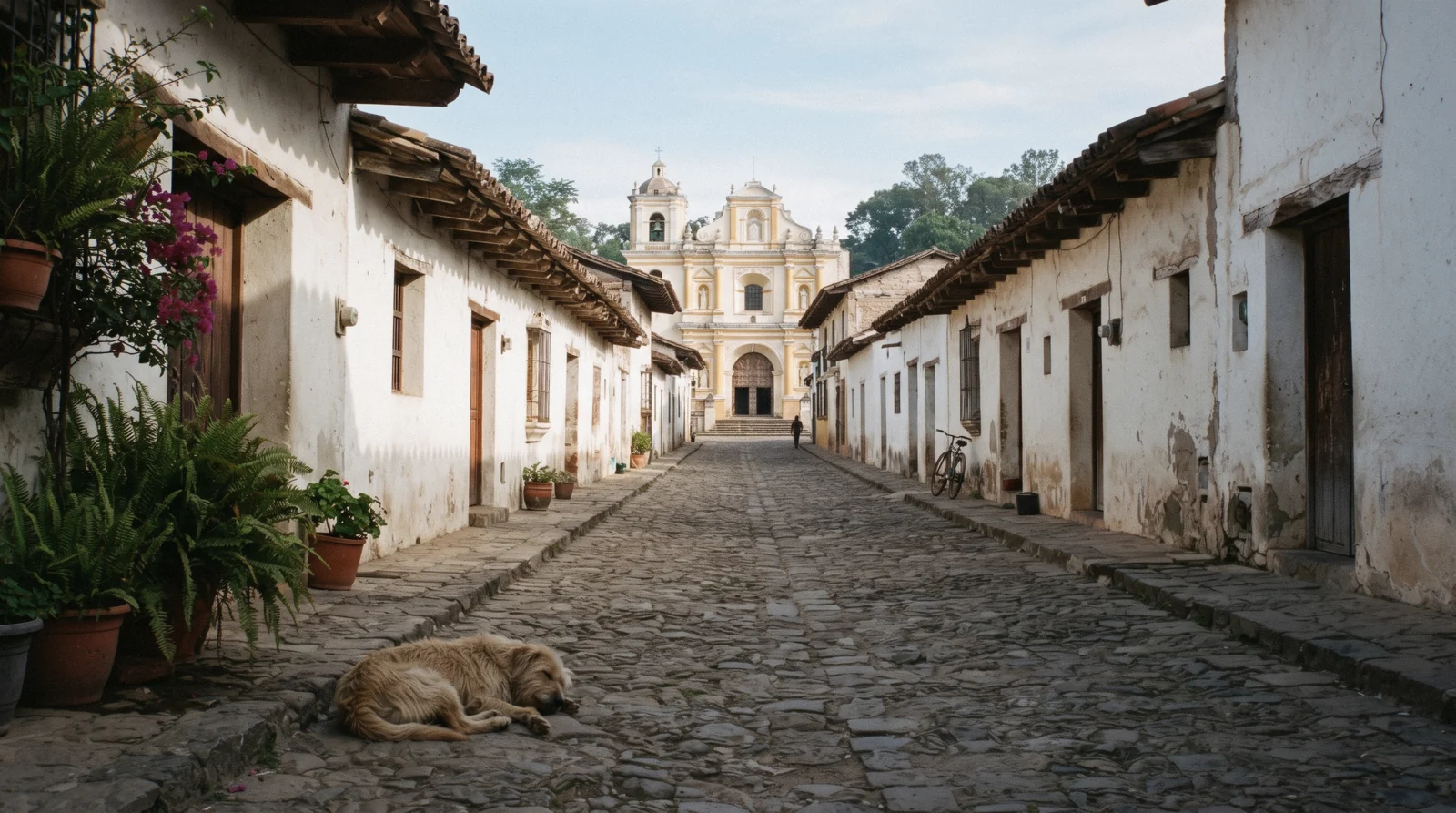
San Felipe, Antigua Guatemala
San Felipe, Antigua Guatemala runs 30 to 40 minutes on foot from Parque Central, and this page in this Antigua Guatemala city guide makes one decision about it: sleeping outside the colonial grid saves real money on long stays, and costs you walking and planning. Almost nothing here publishes a price. No hotel in San Felipe quotes a rate we can cite, so the bed story is built from what does publish, which is the schools and their homestays.
Quick answer Where it is, what it saves, how you get home
San Felipe is the residential district on the old road toward Ciudad Vieja, south-west of the grid, 30-40 minutes on foot from Parque Central or minutes by tuk-tuk. The honest price story is that no hotel here publishes a rate, the guesthouse economy prices for residents and long stayers, and the cheapest citable bed in the valley is a school homestay at $130 (Q993.20) a week with meals. Transport is the trade, a municipal tuk-tuk tariff of Q10 ($1.31) if you agree it first and service that stops about 22:00, so evenings end early or in town.
Key takeaways
- Against the grid, this area only wins on weekly budgets, compare it honestly in the six-area table: long stays win here, two-night visits do not.
- The volcano card that fits this side of town is the Pacaya half-day from $23, which collects in the tourist city a short ride away.
- Arriving without a plan hurts more the further out you sleep, so the airport transfer options matter before you book a bed out here.
San Felipe Against the Colonial Grid
This table compares the area you would actually sleep in, on walk time, evening feel, the bed picture, food and transport. The figures come from the street-geometry estimates used across this guide, the schools' published prices and the platforms' own tour prices, because no hotel rates exist here to quote.
| Aspect | San Felipe | The colonial grid (Centro) |
|---|---|---|
| Walk to Parque Central | 30-40 minutes on foot (estimate) | 0-5 minutes |
| Evenings | Residential quiet, streets empty early | Bar sound and foot traffic until late |
| The bed picture | No published rates, the homestay economy prices for residents, cheapest citable bed $130 (Q993.20) a week with meals | One published anchor, Casa Santo Domingo rooms from $225 (Q1,719), everything else quotes on search |
| Eating | Street food and locals' kitchens, no citable restaurant addresses | Every verified restaurant table (where to eat) |
| Transport after dark | Tuk-tuk Q10 ($1.31) tariff agreed in advance, service stops about 22:00 | Walk home, any hour, past lit storefronts |
The saving is real and so is the planning it demands, every ride after dark is agreed and timed. Figures current in Q3 2026.
The Card That Fits This Side of Town
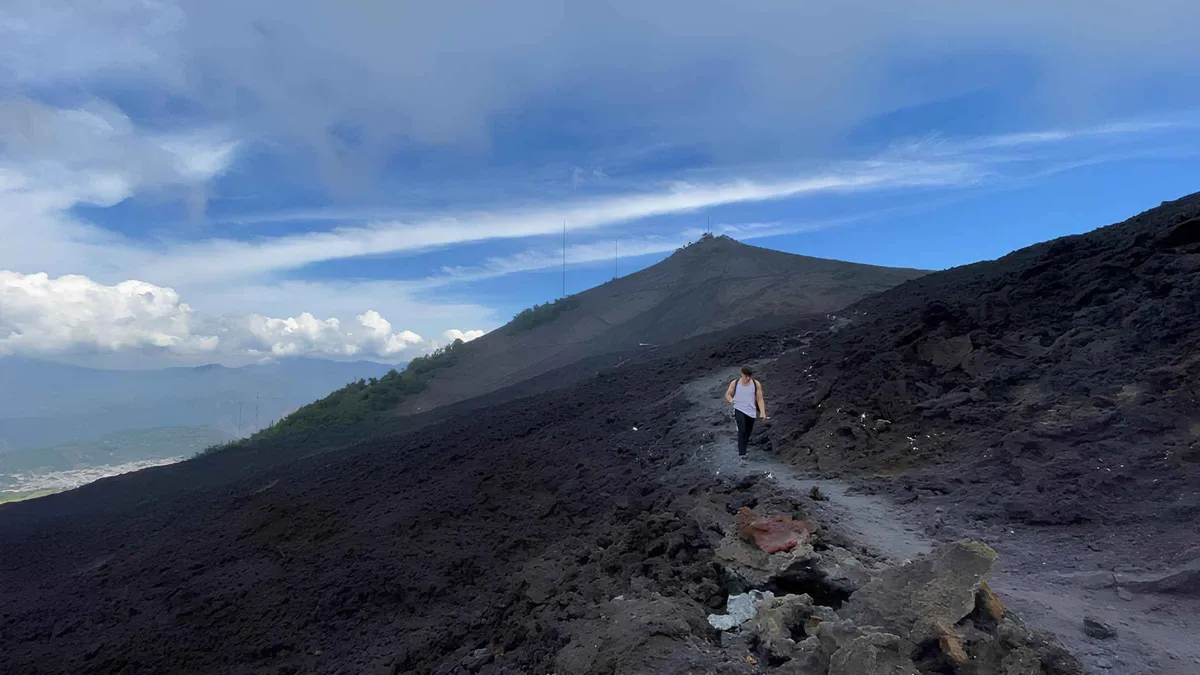
Honesty first: no tour operator stands in San Felipe and nothing picks up at these doorsteps. The card below is the one this site carries that a San Felipe base would realistically join, the Pacaya half-day, which departs from the tourist city a short tuk-tuk ride away.
 from $23
From Antigua: Pacaya Volcano Tour in English/Spanish
Half-day guided Pacaya hike with hotel pickup and marshmallows over the steam vents; the classic introduction to an active volcano, run in English or Spanish.
Check AvailabilityPrices, ratings and details are the platforms' own.
Prices, ratings and details are the platform's own. dollar figures are the listed prices — the platform bills in your account's currency.
Where San Felipe Is, and What It Is
Before you decide whether to sleep here, you need the plain geography of the district.
A real neighbourhood, not a hotel district
San Felipe sits south-west of the colonial grid, on the old road that runs toward Ciudad Vieja, past the line where the tourist city stops and the town starts being for the people who live in it. It is a working residential district with a church square, a slow pace, corner shops and street food. It is not a hotel district, and this page will not pretend otherwise.
That geography cuts one way that helps. The corridor you live on is the same one the village buses work once they clear the market, and Ciudad Vieja and San Antonio Aguas Calientes sit on the terminal's route list, so the southern villages are a shorter errand from this side than from the park end of town. The walk to the bus lot is the price. Fares for those village hops are not published on any official source, so carry coins and pay what the conductor asks, and the bus cautions that apply everywhere in Guatemala apply double after dark.
Here is the finding printed plainly: no citable venue anchor exists in San Felipe. No restaurant, bar or sight in the district publishes an address and hours that we could verify on its own site, so this page names no venue. That absence is information, not a gap in our research. It tells you what kind of base this is, a place where the economy is local, cash and word of mouth, and where the guidebook infrastructure of the grid simply has not reached. If you want addresses, hours and published prices, the where-to-eat list covers what the verified tables cover, and every entry on it sits in the grid or in Jocotenango.
What you get instead is the cheapest feel in the valley. Residents shop, eat and socialise here without a tourist price in sight, and the district's own rhythm, not the itinerary of visitors, sets the day.
The Walk Into Town, Door to Door
The distance is the real price of the address, so here is the walk measured honestly.
Three stages, one corridor
Thirty to forty minutes on foot to Parque Central is a street-geometry estimate, not an official figure, and no authority publishes one. Treat it as a planning number, and expect it to stretch on tired legs.
The corridor breaks into three stages. The first is the residential lanes of San Felipe themselves, low houses, dogs, the church square, streets built for neighbours rather than for visitors. The second is the transition, where the district's lanes meet the old convent blocks around 5a and 6a Avenida Sur and Alameda Santa Lucía, and you start to feel the distance, because the scenery between the district edge and the grid is the least interesting stretch. The third stage is the pleasant one, into the grid proper, past lit storefronts and ruins, and it almost makes you forget the middle section.
Morning is the easy direction. After dinner the same walk feels longer, with full legs and empty streets behind you. Cobblestones and narrow pavements slow everything down, so the map distance always flatters the walk. If you are weighing this area against the grid properly, the where-to-stay six-area comparison has the south-west edge section and the walk minutes side by side.
Morning and Evening in San Felipe
The day here runs on residents' hours, and that shapes every plan you make from this base.
The pace of people who live here
Mornings belong to the school run, the pulperias opening their shutters and delivery trucks backing into lanes. Dogs find their patch of shade by mid morning and the district settles into its working quiet. Nobody here is performing the day for a camera.
Evenings go quiet early. There is no bar strip in San Felipe and nothing keeps the street lit and busy after dinner, so the choice is simple, eat early here or go back into the grid for the evening. The 30-40 minute return after a late meal is the real cost of the address, and it is the line residents will tell you themselves. If you do walk it after dark, the practical version is a phone charged, the main road rather than shortcuts, and the fare for the way back agreed before you need it, because passing tuk-tuks thin out as the night goes on. If the night matters to your trip, the nightlife page shows where the evening actually happens, and none of it is on this side of town.
What you buy with all that quiet is silence. Noise is not a feature here, no music carrying over walls, no tour groups on cobbles at midnight, and that is exactly why long stayers and Spanish students pick the district. A fortnight of sleeping well beats two nights of convenience, and this is the trade expressed as a street.
Transport Reality: the Tuk-Tuk Is Not Optional
Everything about living this far from the park runs through one small three-wheeled vehicle.
Fares, buses, and the numbers to call
The municipal tariff for a tuk-tuk is Q10 ($1.31) per ride inside the city, set by the municipality itself. Tuk-tuks are not metered, they are cash only, and practice often runs higher for visitors, with drivers commonly asking more in the street. So agree the fare before you board, every time. Service stops around 22:00, which means a late arrival or a late dinner needs a plan rather than a hail. A pre-booked transfer covers the airport end of the journey, and the airport page compares the shuttles and private cars with published prices.
Chicken buses still run the valley. The terminal sits behind El Mercado at the north-west corner of town, and Ciudad Vieja is one of the routes leaving from it. Village fares are not published on any official source, a Q1-Q5 zone is commonly reported with no citable tariff, so carry small coins and pay what the conductor asks. The UK FCDO advises avoiding public buses in Guatemala altogether, so treat them as daylight transport at most.
Emergencies: Police 110, Fire and Ambulance 122 or 123. The tourist line 1500 reaches ASISTUR 24/7, with WhatsApp on +502 5188-1819, and DISETUR tourist police work the tourist city. Safety and scams has the full picture.
Sleeping in San Felipe: the Honest Price Picture
This is the section where most guides invent a hostel, and this one refuses to.
No published rates, and why that matters
No citable hotel anchor exists in San Felipe. Nothing in the district publishes a rate we can quote, and we will not invent one. That is the whole finding, and it is worth understanding what it means. The guesthouse economy here prices itself for residents, Spanish students and long stayers, in person and by word of mouth, so the value sits in weekly and monthly arrangements that never reach the booking platforms. You will not find these beds on a search engine, and a two-night tourist asking for one will be quoted whatever the moment produces.
The citable beds belong to the language schools. Their classrooms sit in the grid, but their homestay programs put a bed with a family at the family's own address, and the prices are published. Spanish Academy Antigüeña sells the family homestay from $130 (Q993.20) a week, shared bath, three meals a day except Sundays, or $160 (Q1,222.40) with a private bath. Ixchel bundles one-on-one lessons, the homestay and cultural activities from $145 (Q1,107.80) a week for ten hours of classes, up to $235 (Q1,795.40) for twenty-five. San José El Viejo sells tuition at $180 (Q1,375.20) a week full day and keeps its own rooms on site at $470-610 (Q3,590.80-4,660.40) a week with breakfast on weekdays. A homestay week works out between roughly $19 and $34 a night with food included, which is why students afford fortnights here. The one hotel in the city that publishes rates, Casa Santo Domingo from $225 (Q1,719), sits across town and tells you what the formal market charges.
For the fuller bed map, the Spanish schools page lists every published package, and the hostels page covers the grid's dorm economy.
Up the Hill: El Hato Changes the Maths
The ridge above the district is part of the same decision, so it belongs on this page.
Earth Lodge and the thin mountain services
The village of El Hato sits about 15 minutes by vehicle above San Felipe, on the green shoulder of the volcano. Its anchor is Earth Lodge, an avocado farm whose restaurant is open to the public daily from 8am to 8pm, with the cafe and bar running from 7:30am to 9:30pm. The lodge sits 300 m from the nearest road, so every arrival ends in a walk on a dirt path, which is exactly what its guests want and exactly what makes it awkward as anything but a destination.
One fact from its own site shows how thin mountain services run. The lodge announced a full kitchen renovation closing it for all of September, with reopening announced for October 1. One kitchen and one closure, and the whole mountain stops serving lunch. Plan around that, not against it.
The practical shape of a day from here is a San Felipe bed with an Earth Lodge lunch, which is a good day by any standard. Using San Felipe as a base for the ridge itself still means planning every ride up and every ride down, because nothing up there runs late. The other ridge option this site covers is Hobbitenango, whose day pass is $8.00 (Q61.12) for adults and $6.00 (Q45.84) for children aged four to ten, with a round-trip shuttle from the Antigua office at a further $8.00 (Q61.12) a person. Its shuttle windows are fixed, up between 8:00 and 10:00 in the morning and again 14:00 to 16:00, and down at set hours ending at 18:00, which tells you exactly how early a mountain evening starts.
Cash Mechanics for a Base Out Here
The further you sleep from the grid, the more your day runs on banknotes, so the mechanics deserve their own numbers.
Tuk-tuks run on cash, the market runs on cash, and the corner shops that make an outer district liveable often do not take cards at all. Cards work at hotels and larger restaurants, usually with a surcharge, and the airport shuttle adds ten percent to card payments, so even the big tickets carry a cash discount. The cash machines charge for the privilege: fees commonly reported in town run Q40 ($5.24) at BAC and Q49 ($6.41) at 5B, with Banco Industrial charging US$4.00 (Q31) a withdrawal, and the community-maintained source behind those figures notes that the fees seem fixed regardless of the amount, so withdraw larger sums less often.
The official advice on top of that: check machines for evidence of tampering, change money in hotels, banks or exchange offices rather than on the street, and avoid withdrawing a lot at night. The full money ledger, down to the exit tax that is already inside your airline ticket, lives on the costs page.
Arriving Late to an Outer District
Every arrival in Antigua starts at La Aurora in Guatemala City, and an outer district makes the last leg less forgiving.
The airport sits 40-45 km away, a run of 45 minutes to an hour and a half off-peak that Guatemala City traffic can stretch badly. Pre-book a shared shuttle and the operator's own published fare is $15 (Q115) a head, daily departures at 06:00, 09:30, 11:00 and 13:30, reserving 48 hours ahead. Decide at the arrivals curb instead and the walk-up vans run about Q150 ($19.63) a seat through the day until around 20:00, needing three or more riders. A private transfer costs $50 (Q382) for one to four passengers at any hour, adding $15 after 21:00, and no official airport taxi tariff exists, so any figure a dispatcher names is a negotiation.
For a San Felipe bed the private transfer is the honest pick, for one geometric reason: the drop-off for everything else is the market end of town, and tuk-tuks stop working about 22:00. The chicken bus from Guatemala City, Q15 ($1.96) cash, actually drops near El Mercado on the west side, which by street geometry shaves the last walk for this district compared with the park end of town, but the UK FCDO advises avoiding public buses in Guatemala altogether, so treat that as a daylight option with light bags. The full comparison with every figure is on the airport page.
San Felipe on the Map
San Felipe's own sights publish no coordinates, so the carmine pin marks the district. The green pins are the fixed points that define its geography, the park every walk is measured against and the bus terminal where the village buses leave.
Next Door to San Felipe
Centro Histórico
The colonial grid and every verified sight, 30-40 minutes on foot: the Centro Histórico.
30-40 min walkJocotenango
The finca town on the other side of the valley, coffee museum and courtyard tables: Jocotenango.
A ride across townWhere to stay
All six areas compared with the walk minutes and the honest gaps: where to stay.
The money questionSan Felipe: Questions
Where is San Felipe in Antigua Guatemala?
It is the residential district south-west of the grid, on the old road toward Ciudad Vieja, past the line where the tourist city stops. The Centro Histórico is the walk-in-town counterpart.
How far is San Felipe from Parque Central?
30-40 minutes on foot by street geometry, or a few minutes by tuk-tuk at the municipal Q10 ($1.31) tariff if you agree it in advance.
Is San Felipe cheaper than the centre of Antigua?
Honestly, there are no published rates on either side to compare. The one citable anchor anywhere is Casa Santo Domingo from $225 (Q1,719) in the grid, and the cheapest citable bed in the valley is the $130 (Q993.20) school homestay week. See the schools.
Can you walk from San Felipe to the centre at night?
Possible and common, but the streets empty early and the last stretch of the corridor is dim, so most residents ride home and agree the fare first. Read safety and scams before deciding.
How much is a tuk-tuk to San Felipe?
The municipal tariff is Q10 ($1.31) inside the city, practice runs higher for visitors, agree the fare before boarding, and service stops about 22:00. Getting around has the full fare picture.
Is San Felipe a good base for a first visit to Antigua Guatemala?
No. First visits belong in the grid, where every sight is a short walk and the evenings run late. San Felipe pays off for long stays and budgets. Compare all six areas in where to stay.
Which volcano tour works from a San Felipe base?
The Pacaya half-day from $23, which departs from the tourist city a short ride away rather than from San Felipe itself.
Do any hotels in San Felipe publish their rates?
Not one that we could verify. Nothing in the district carries a published rate, which is different from saying it has no beds: the guesthouses here quote in person and price for weekly and monthly stays. The city's one published rate belongs to Casa Santo Domingo, and the honest way to compare is what the schools publish against the live search on where to stay.
What is there to do in San Felipe itself?
Honestly little that publishes an address and hours, and this page names no venue for exactly that reason. The district is a base with a church square and street food, the sights are a walk or a tuk-tuk away in the grid, and the ridge above it, El Hato and Earth Lodge, is the district's real excursion. The verified sight list lives on things to do.
Is San Felipe walkable, or do you need a vehicle?
Walkable, with an asterisk. The district's own lanes are flat and quiet, the corridor into town is a 30-40 minute estimate each way, and the grid at the end of it is the most walkable city centre in the country. What pushes most residents toward wheels is the return leg after dark, so the working pattern is walking by day and a tuk-tuk at the municipal Q10 ($1.31) tariff by night. The official safety framing prefers radio-dispatched taxis or hotel cars for after-dark rides, which getting around details.
Prices, hours and terms are set by the venue or operator and confirmed at checkout.
We may earn a commission if you book through one of our links, at no extra cost to you. Full affiliate disclosure