 Antigua Guatemala City Guide
Plan a Trip to Antigua Guatemala
Welcome to this Antigua Guatemala city guide, where this page is the index to the practical layer. These antigua guatemala travel tips give the short answer to every planning question and route you to the page that owns the detail. The tourist institute INGUAT recommends 3 to 4 days in the city, and that number anchors most of what follows. The page also sets the booking order a first visit should follow, from the volcano seat to the last shuttle.
Quick answer How long, what to book first, what it costs
The city deserves the 3 to 4 days its own tourist institute recommends, and most of that time costs nothing but shoe leather. Book two things before you land, the Pacaya seat and a bed for Holy Week if Easter is your dates, and let everything else walk up. Cash runs the town, cards carry a surcharge where they work at all, and the costs page has the numbers.
Key takeaways
- The full index below lists every planning page on this site, in the order a first trip needs them.
- No public bus serves La Aurora airport, so the choice is a $15 pre-booked shuttle or a private ride, compared on the airport page.
- Make the walking tour at $25 the first booked hour in town and the free layer the zero-dollar rest of the day.
Every Planning Page, in the Order You Need Them
Twenty-five pages sit under this hub, each carrying the full detail behind a one-line answer here. The groups follow the order a trip actually gets planned.
Timing the trip
Money and beds
Getting there and around
Eating and drinking
Doing more for less
Safety and the family
Start Here: Three Questions in Order
Answer these three questions in order and the rest of the plan writes itself.
How many days? Give the city the 3 to 4 days INGUAT itself recommends, and spend most of them on foot. When?
The season table below decides it, and the weather page carries the full 30-year record behind it. What to book first? The booking table below sets the order, and only two lines in it matter before you land.
One more planning decision is what goes in the bag. The city grid is compact and walkable, it sits at 1,530 m altitude, and nights turn cool all year, so one warm layer earns its place.
How the Days Divide
The grid rewards the plan that gives it more than one morning, and the division below is the one the evidence supports.
INGUAT recommends 3 to 4 days for the city, and the shape of that recommendation is easy to reconstruct: one day for the central churches and ruins, one for the viewpoints and the ridge, one for a volcano or the lake, and a fourth for the markets and the museums nobody schedules first. Whatever the length, the pattern holds: the mornings are for ruins and viewpoints, the afternoons for markets and museums, and the evenings are free, because the grid is as pleasant to wander at dinner hour as it is at ten.
| You have | What fits | The honest limit |
|---|---|---|
| One day | The central grid on foot, the arch, Parque Central, one museum complex such as Casa Santo Domingo, whose museums run 9 to 18 Monday to Saturday and 11 to 18 Sunday | The volcano half-day consumes 6 hours of a one-day visit |
| Two to three days | Add Cerro de la Cruz, a 20 to 30 minute signposted climb, the market, a cooking class or the ridge parks | This is the sweet spot the official recommendation points at |
| Four or more | A volcano morning, the lake day, the Spanish school week, Chichicastenango on its market days | Antigua becomes a base, and where to stay becomes a real decision |
The itineraries that time these shapes hour by hour live on the plan pages they belong to, and the things-to-do hub ranks the sights the days are built from.
What to Book, and in What Order
Only a handful of bookings reward planning ahead, and this table puts them in order.
Two booking truths run the table: the volcano is the only card that genuinely runs out on popular dates, and Holy Week follows the municipal crowd plan rather than any published sell-out calendar, so nobody can print a book-by date for beds and this guide does not invent one. What the municipality does publish is the operating plan, vehicle stickers at Q10 to Q20 and free buses in from the Santa Ines car parks, which the Semana Santa page explains in full.
| Booking | The rule | When |
|---|---|---|
| Pacaya seat | Book the cheapest card with free cancellation up to 24 hours before | A few days ahead for weekends, first |
| Holy Week beds | No official sell-out date exists, the municipality counted about 56 velaciones and 58 processions in one season | The moment Easter is your dates |
| Airport shuttle | Adrenalina wants 48 hours notice for its $15 seat | 48 hours before landing |
| Lake shuttle | Adrenalina runs Antigua to Panajachel at $25, three departures a day, 48 hours notice | The day before |
| Walking tours | Two cards at $25 run daily from fixed meeting points | The night before is fine |
| Cooking classes | The two kitchen cards are small and fill first | Two days ahead in high season |
Money: Cash, Cards and What Things Cost
Cash decides most days here, and the fixed fees make the withdrawal habit a planning choice.
The ledger above is the working set: dollar figures convert at the site's fixed $1 = Q7.64, the quetzal is not pegged so every local figure is about, and the ATM fees are the last community-reported figures, so verify at the machine before you rely on them.
| Item | Figure | Note |
|---|---|---|
| BAC ATM fee | Q40 ($5.24) | Commonly reported, community-dated |
| 5B ATM fee | Q49 ($6.41) | Commonly reported, community-dated |
| Banco Industrial ATM fee | $4.00 (Q31) | Charged in dollars |
| Tuk-tuk in town | Q10 ($1.31) tariff | Municipal rule, practice runs higher, not metered, stops about 22:00 |
| Chicken bus to Guatemala City | Q15 ($1.96) | Cash, from the terminal behind El Mercado |
| Airport exit tax | In your airline ticket | No counter payment at La Aurora, no staff may ask |
The First-Timer Checklist, Priced
Eight steps in the order a first visit actually meets them, each with its cost and the page that carries the detail, so the whole practical layer fits one screen. Figures are the site's in Q3 2026 set, converted at $1 = Q7.64.
| Step | When | What it costs | Where the detail is |
|---|---|---|---|
| Book the volcano seat | Days before, weekends first | From $23 listed, cancellable free up to 24 hours before | The tours hub |
| Hold Holy Week beds | The moment Easter is your dates | Not stated, no official sell-out calendar exists | Where to stay |
| Reserve the airport shuttle | 48 hours before landing | $15 per seat pre-booked, about Q150 walk-up | The airport page |
| Withdraw quetzales | First morning | Q40 to Q49 per withdrawal at the common machines | The costs page |
| Walk the central grid | Day one, morning | Free, the streets carry it | Things to do |
| Climb to the cross viewpoint | Any clear morning | Free, 20 to 30 minutes up a signposted trail | Cerro de la Cruz |
| Eat one traditional plate | Day one, lunch | Menu prices are the venues' own, most publish none | What to eat |
| Book the long day | Two days ahead | $95 to $145 for the market or the lake | Day trips |
Getting In: the Airport in One Table
The transfer from La Aurora airport to Antigua covers 40 to 45 km and the options differ mostly in price.
No direct public bus serves La Aurora. The road takes 45 minutes to an hour and a half off-peak, longer in Guatemala City traffic, and the full comparison with card surcharges lives on the airport page.
| Option | Price | Notes |
|---|---|---|
| Shared shuttle, walk-up | About Q150 ($19.63) | Departs when 3 or more riders, until about 20:00 |
| Shared shuttle, pre-booked | $15 (Q115) | Adrenalina, four departures a day, 48 hours notice, $10 per extra bag |
| Private transfer | $50 (Q382) | Turansa, 1 to 4 passengers, any time, after 21:00 adds $15 |
| Chicken bus | Q15 ($1.96) | No airport stop, this is the Guatemala City route from El Trebol, not a luggage option |
The Season in One Table
This is the shape of the year at a glance, and the weather page carries the full 30-year table.
Dry season runs November to April. September averages 311 mm of rain across about 28 rainy days, the wettest month, and April is the warmest with an average high of 27.0 C (80.6 F). July shows a dip, the canicula, a mid-rainy-season dry spell the national weather service forecasts each year.
Nights are cool all year at 1,530 m. None of this changes what the city costs, but it changes what the days feel like, which is why the itinerary pages argue by month rather than by generic season.
| Window | What it is | Who it suits |
|---|---|---|
| November to April | Dry season, dust and clear mornings | First visits, volcano plans |
| July | Canicula dip inside the rainy season | Rain-tolerant travellers who want lower prices |
| September | Wettest month, about 28 rainy days | Nobody in a hurry, pack for the afternoon storm |
| Holy Week | The biggest event of the year, streets close for processions | Readers of the Semana Santa page, book early |
If Your Dates Include Easter: the Operating Reality
Holy Week is the city's biggest event and the one week where planning beats improvising.
The municipal plan from the most recent season gives the scale: about 56 velaciones and 58 processions, a pedestrian perimeter active from 4:00 on procession days, and central streets, Calzada Santa Lucia among them, closed to vehicles. Shops restock before 04:00 on the holiest days because deliveries stop after that. Easter Sunday 2027 falls on 28 March with Palm Sunday on 21 March, dates computed from the calendar, and the municipal procession programme for 2027 had not been published when this page was written, so treat the hour-by-hour detail as pending.
The municipality runs a live assistant on its own site with procession locations, the safe-perimeter map and the bus routes, so the hour-by-hour picture exists once the season starts.
| Item | Figure | Note |
|---|---|---|
| Car sticker (MarbEx) | Q10 ($1.31) weekday, Q20 ($2.62) weekends and Holy Week | Motorcycles half that, buses Q60 to Q100 |
| Daily parking cap | Q40 ($5.24) | At the Santa Ines and La Polvora lots |
| Free park-and-ride buses | Three routes | Santa Ines, INVAL and Rancho Nimajay into the grid |
| Emergency centre | Antiguo Palacio Arzobispal | Medical post and lost-person point during the season |
The dates, the carpets and the street-by-street closures are the Semana Santa page's subject, and it is the one planning page worth reading before booking anything for that week.
Getting Around Without a Car
The grid is compact enough that transport is a small decision, made mostly at the margins of the day.
Walk first: the colonial core is four streets by four, the cobbles argue for real shoes, and the tuk-tuk is the fallback rather than the default. The municipal tariff is Q10 ($1.31) a ride in town, not metered, with drivers commonly asking more, and the vehicles stop working about 22:00, so a late dinner plans its own walk home. A taxi queue sits at Parque Central.
| Mode | Figure | What decides it |
|---|---|---|
| Tuk-tuk in town | Q10 ($1.31) municipal tariff | Negotiate before boarding, practice runs higher, none after about 22:00 |
| Chicken bus to Guatemala City | Q15 ($1.96) cash | Departs behind El Mercado, frequent from first light |
| Village chicken buses | Fare not officially published | Buses to San Pedro, San Juan and Santa Ana every 10 to 20 minutes |
| Shuttle to the lake | $25 each way | Adrenalina, three departures a day, 48 hours notice |
The UK FCDO advises against travel on the public buses for safety reasons, which is guidance worth reading in full on the chicken bus page before choosing the Q15 ride, and the getting-around page carries the whole street-level picture.
What the Altitude Does to a Plan
The city sits at about 1,530 m, and that single number rewrites the packing list and the walking pace.
Days run warm without ever being tropical, average highs stay between 23.5 and 27.0 C (74 to 81 F) all year, but the nights are cold for Guatemala, dropping to an average low of 13.6 C (56.4 F) in January. The sun is stronger at altitude than the temperature suggests, and the classic pattern is a hot walking afternoon followed by a evening that needs a fleece. Rain arrives as an afternoon storm rather than a full day of it, except in September, which averages 311 mm across about 28 rainy days and deserves either a flexible plan or the rainy-day list.
The two numbers to plan around
Pack one warm layer for the nights and one rain shell for the afternoons and the climate stops being a planning risk. Water discipline matters more than temperature: the sun at 1,530 m dehydrates walkers who feel comfortable, and every comedor sells filtered water by the jug for quetzales.
Safety in Four Lines
Four lines cover the risk picture a planner actually needs.
The US advisory sits at Level 3, Reconsider Travel, for the country as a whole, while the UK FCDO restricts only border strips near Mexico, and Sacatepequez, the department Antigua sits in, is not named. The tourist assistance line ASISTUR runs 24 hours on 1500, with DISETUR tourist police in town, and the national numbers are police 110 and fire and ambulance 122 or 123. The volcano caveat matters for planning: Fuego and Acatenango have been suspended since 4 August 2026, and the hiking status page tracks what is open. The safety page carries the full picture.
Where the Practical Help Sits
Two desks and three numbers cover almost everything that goes wrong.
The INGUAT tourist office stands at 5a Calle Oriente No. 11, Local 2, two blocks east of the park, phone +502 2290 2800, open weekdays in the morning and afternoon, though published sources disagree on whether the doors close at 16:00 or 17:00. For emergencies the national numbers are police 110 and fire and ambulance 122 or 123, and the tourist assistance line ASISTUR runs 24 hours a day on 1500, with English-speaking staff and a WhatsApp desk on +502 5188 1819. DISETUR, the tourist police, patrol the streets around the park.
Municipal complaints, noise included, go to the ayuntamiento on PBX 1552. The safety page carries the scams and the fuller risk picture.
Phones, Money Apps and the Small Decisions
An hour of setup on arrival afternoon saves a week of friction.
Both network operators sell eSIMs that activate by QR code without a store visit, and Claro's prepaid data packages start at Q35 ($4.58), while a tourist package at about Q99 (about $12.96) for 30 days is the commonly reported shape at Tigo. Coverage in town is good on both. Bring cash for the first day because the ATM fees run Q40 to Q49, download the municipal map offline, and if the trip includes Easter, read the Semana Santa page before booking anything with a fixed date, because the municipality closes central streets to vehicles on procession days and runs free buses in from the Santa Ines car parks.
Evenings: the Rules the Bars Operate Under
Nightlife planning in Antigua is bounded by municipal rules, and they are stricter than most visitors expect.
The municipality caps ambient music at 60 decibels and authorizes amplified hours from 06:00 to 23:00, and since 2022 any restaurant or bar operating after 20:00 needs municipal authorization, rules reported from the city's own announcements and the legal analysis of its sound regulation, so mark them as secondary-sourced. On Holy Thursday and Good Friday the municipality has ordered bars closed outright. The practical planning rule: eat dinner early on the nights that matter, keep a fleece handy for the walk home, and let the nightlife page name the venues that publish their own hours.
The Four Cards Most Plans Start With
A first plan usually books one volcano morning, one guided walk and one long day, and these four cards cover that shape starting from $23, all cancelling free up to 24 hours before.
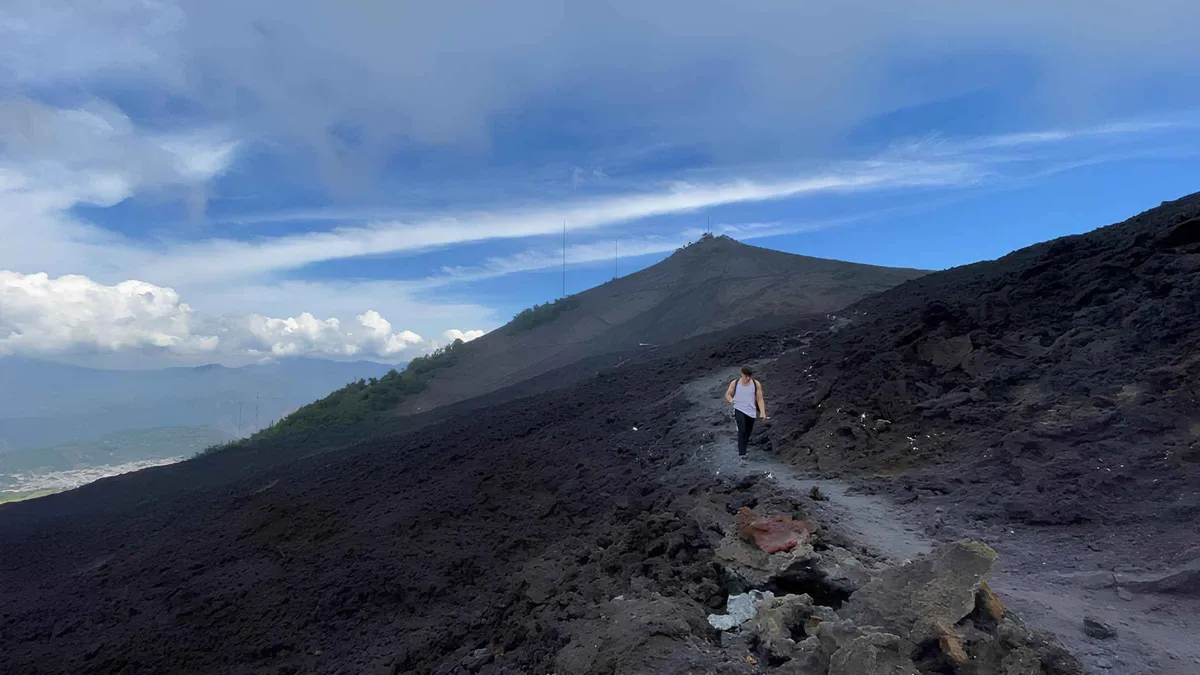 from $23
From Antigua: Pacaya Volcano Tour in English/Spanish
Half-day guided Pacaya hike with hotel pickup and marshmallows over the steam vents; the classic introduction to an active volcano, run in English or Spanish.
Check Availability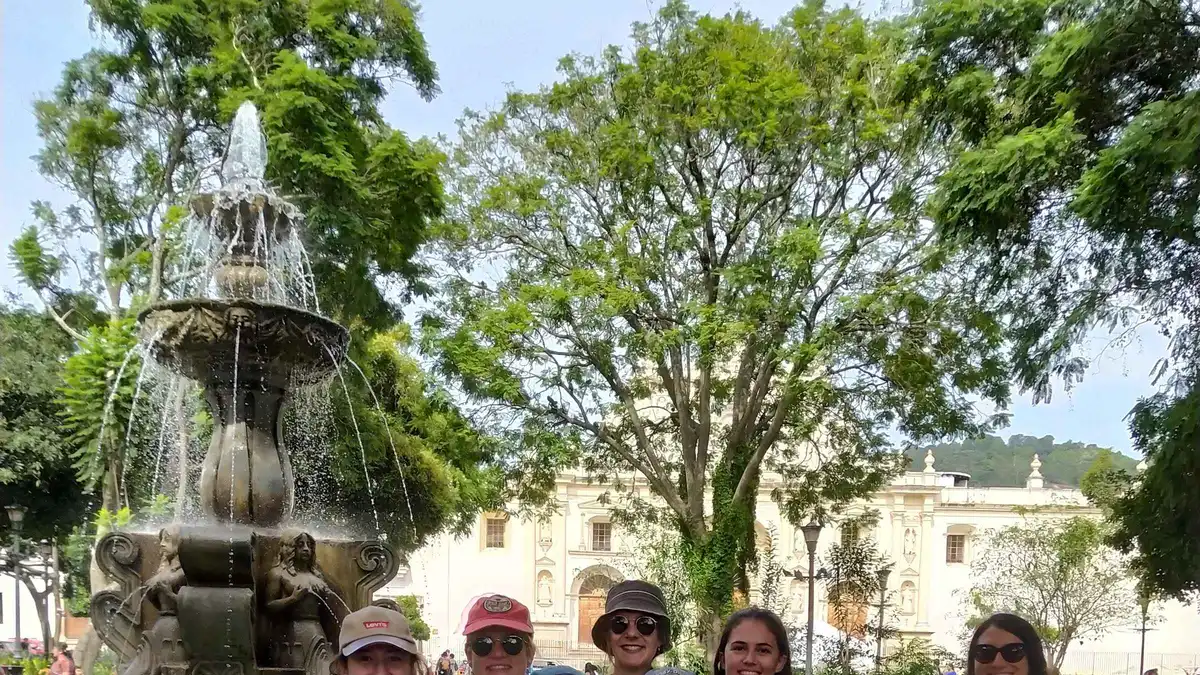 from $25
Antigua Guatemala: City Highlights Guided Walking Tour
2.5-hour small-group walk through the grid with a licensed guide; the fastest way to make the ruins and churches mean something.
Check Availability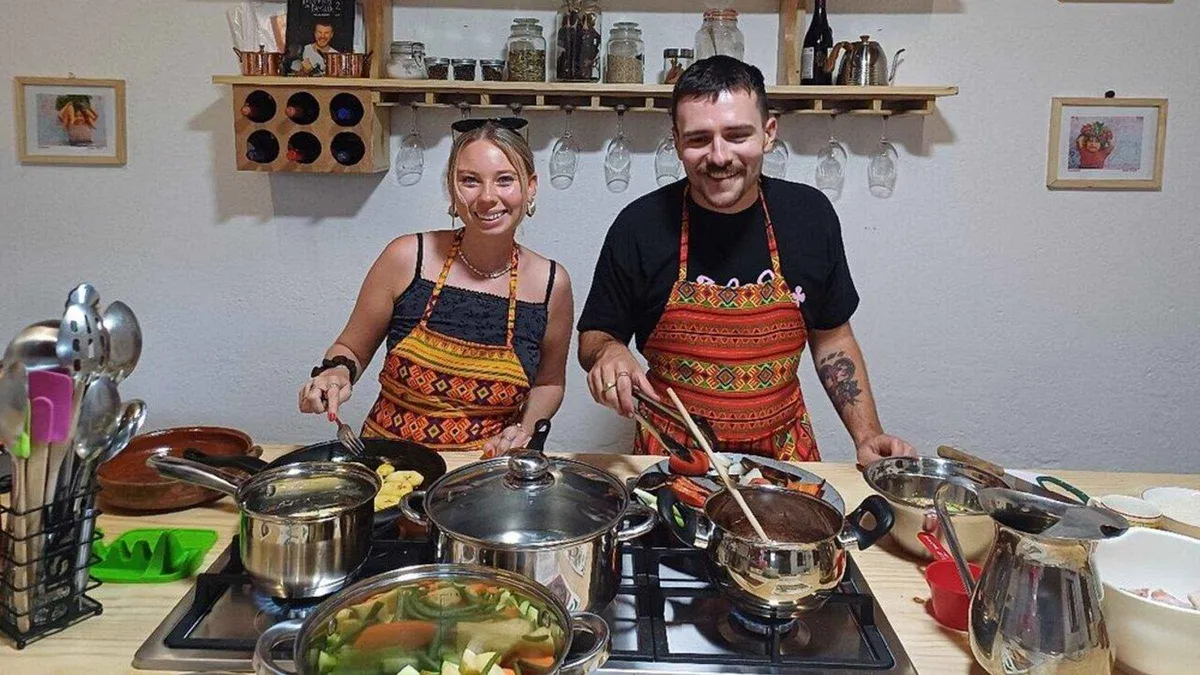 from $38
Antigua: Traditional Guatemalan Cooking Classes — Casa San Miguel.
Two hours of hands-on Guatemalan home cooking in a family kitchen; the private, personal version.
Check Availability from $24
Guatemala City: One way Shared Transfer to Antigua
Shared van between Guatemala City and Antigua; the budget door-to-door with luggage space.
Check AvailabilityPrices, ratings and details are the platform's own. dollar figures are the listed prices — the platform bills in your account's currency.
Eating: the Practical Layer
Food planning here is about hours and reservations rather than prices, because almost no kitchen publishes a menu price online.
Book only the fine-dining rooms, and even there the reservations run through booking widgets rather than phone trees. The everyday rule is simpler: the creperie on 6a Avenida Norte takes no reservations at all and runs 10:00 to 21:00, or 22:00 on Friday and Saturday, the craft-beer taproom by the arch pours daily from 10:00 to 23:00, and the rooftop on 1a Avenida Sur serves from 08:00 to 22:00. For the traditional dishes and where they actually come from, the what-to-eat page names the city's own list, and the restaurant page argues the tables worth the money.
Staying a Week? The Spanish-School Option
Half the long-stay plans in this city pass through a classroom, and the prices are public.
Three schools publish their rates outright: weekly one-on-one packages from $145 to $235 at the school on 9a Calle Oriente, a full-day week at $180 at the school on 5a Avenida Sur, and classes with family homestay from $120 to $190 a week at the academy on 1a Calle Poniente that has run since 1985. Homestay with meals is the core package at two of the three, and one teacher per student is the standard product across all of them. The full comparison, the booking advice and the honest gaps sit on the Spanish schools page.
Book the first week from home and the school usually answers within a day, and arrange the airport transfer with the school only where it publishes the price, which one of the three does at $55.
Once the Plan Is Set
The plan is fixed, so these pages turn it into days.
Planning a Trip to Antigua Guatemala: Questions
How many days should I plan in Antigua Guatemala?
Three to four days. That is the tourist institute INGUAT's own recommendation for the city, and the grid is compact enough to honour it without rushing. Most sights cost nothing, so the length of stay is a matter of pace, not budget. Draw the day list from things to do. The shape of those days is on the things-to-do hub: one for the central churches, one for the viewpoints, one for a volcano.
What should I book before arriving?
Two things. The volcano seat, because it is the only card that genuinely fills on popular dates, and a bed for Holy Week if Easter falls in your dates. Shuttles want 48 hours notice, and everything else can wait until you are standing in the street. The full order sits in the booking table.
Is Antigua Guatemala expensive?
It sits between the two. A day here costs less than a European city break and more than the Guatemalan countryside, mostly because the town prices for visitors. The biggest fixed costs are ATM fees and card surcharges. The line-by-line ledger lives on the costs page.
Do I need cash in Antigua?
Yes. Markets, tuk-tuks and chicken buses run on cash, and cards carry a surcharge where they are taken at all. ATM fees run about Q40 ($5.24) to Q49 ($6.41) a withdrawal and are effectively fixed, so withdraw larger amounts fewer times. The numbers sit in the money section. Withdraw larger amounts fewer times, because the fee is charged per withdrawal whether you take Q500 or Q2,000.
When are the Easter processions?
Easter Sunday 2027 falls on 28 March, with Palm Sunday on 21 March. Those dates are computed from the calendar and worth a cross-check when the municipal program publishes, because the city's own schedule sets the routes and closures. The full picture is on the Semana Santa page.
What happens if it rains?
Afternoon storms are a pattern, not a surprise, and September is the wettest month with about 28 rainy days. Plan mornings outdoors and keep an indoor option for the afternoon, which the museums and workshops cover well. The ready-made wet-day plan waits on the rainy day page.
What altitude is Antigua Guatemala, and does it matter for planning?
The city sits at about 1,530 m. Days stay warm without ever being hot and nights drop to the low teens Celsius even in the dry season, so the packing decision is one warm layer, and the sun at altitude drinks more water than you expect. The weather page carries the month-by-month table.
Is there a tourist tax or hotel fee in Antigua Guatemala?
No official figure is published anywhere we could verify, so this guide prints none, and a hotel that adds a percentage to the bill should explain it at the desk before you pay. What is certain is on the hotels page, and the daily spending picture is on the costs page.
Planning Antigua, on Video
Three overviews of the city and its pace, useful for judging how many days the grid deserves.
Antigua Guatemala is UNDERRATED | 3 Day Travel Guide
A three-day shape of the city, the same length the tourist institute recommends.
Video: Explorin with LaurinWhat to Do in Antigua, Guatemala | 36 Hours Travel Videos | The New York Times
A short-visit cut through the sights, useful for comparing against a longer stay.
Video: The New York TimesTop Things to do in Antigua Guatemala (Don't Miss These!)
The priority list a first plan should draw from.
Video: Kiran Goes PlacesVideos load from YouTube only when you press play.
Prices, hours and terms are set by the venue or operator and confirmed at checkout.
We may earn a commission if you book through one of our links, at no extra cost to you. Full affiliate disclosure