 Antigua Guatemala City Guide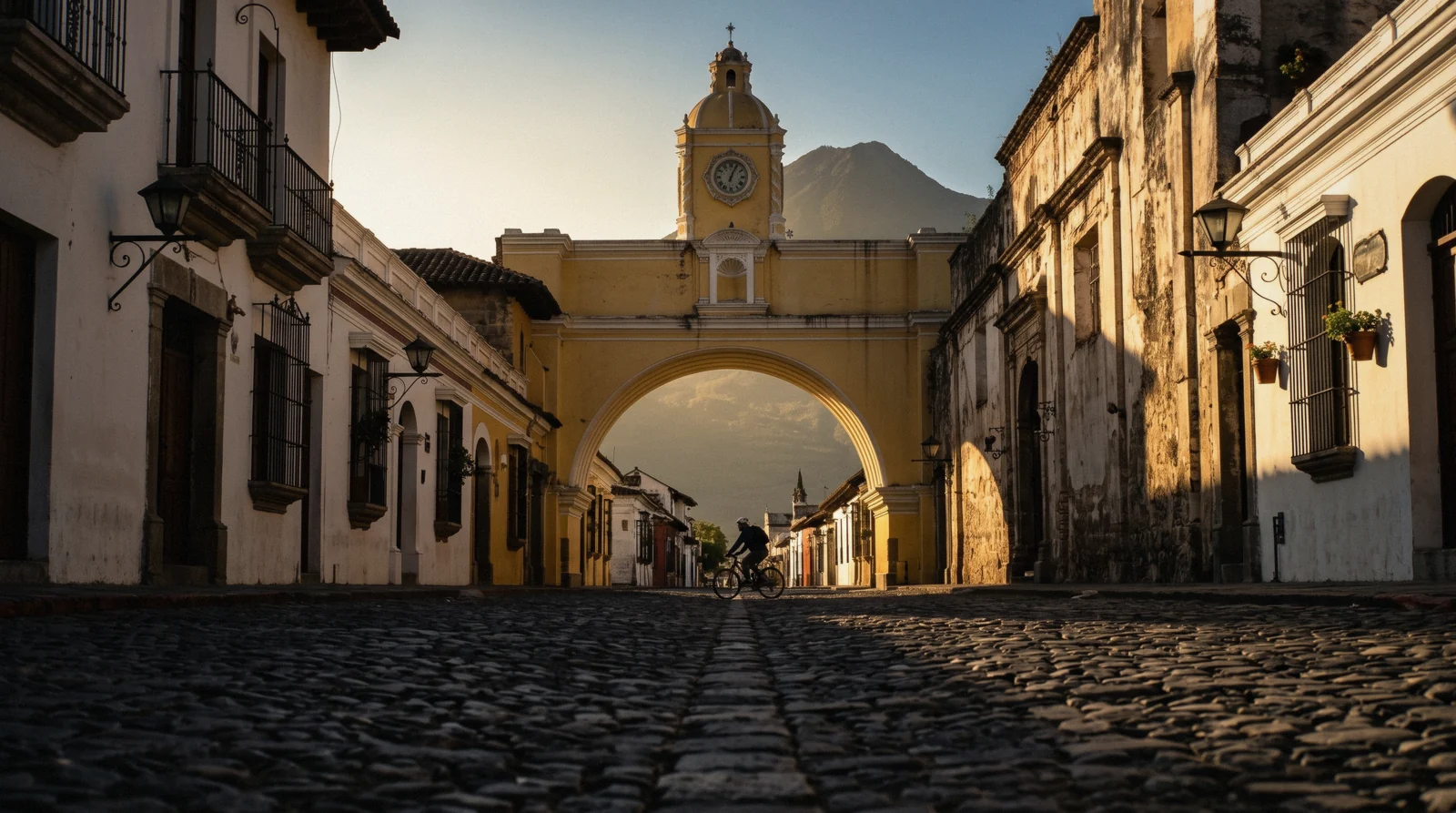
Santa Catalina Arch (Arco de Santa Catalina)
The Santa Catalina arch, Antigua Guatemala's most photographed landmark, is the yellow baroque bridge on 5a Avenida Norte, built from 1693 so cloistered nuns could cross the street unseen. Today it frames Volcán de Agua in the city's signature view. It is free, it never closes, and there is no ticket. This page gives the honest story of the clock that most guides get wrong, the photo angles that work, the routings and how to pair it with Parque Central, La Merced and the walking tour.
Quick answer What the arch is, what it costs, how long, what to pair
The Santa Catalina Arch is the yellow baroque bridge built from July 1693 so cloistered nuns could cross 5a Avenida Norte unseen, and it is now the single most photographed spot in the city with Volcán de Agua framed under it. It is free and open at all hours, there is no ticket, gate or interior to enter. Give it 10 to 20 minutes, walk the corridor from Parque Central, and if you want the story told properly the city highlights walking tour passes directly under it.
Key takeaways
- The clock was not in the original design, it stopped in the 1976 earthquake and was repaired in 1991, and the full honest history is in the clock section.
- Early morning gives an empty frame and the angle from the photography section puts Agua under the arch.
- Pair the arch with La Merced two blocks north and the map section plots the whole corridor.
Key facts
Opening hours
| Open street | The arch is a bridge over 5a Avenida Norte, open around the clock, no gate and no published access rules |
|---|
Closed None, the street never closes
Planning it
- Time needed
- Not stated by any authority. Our routing: 10-20 minutes for the arch, longer with the corridor
- Address
- 5a Avenida Norte, La Antigua Guatemala (Calle del Arco)
The table shows the free street access beside the two walking tours that pass under the arch. The figures come from the operators' own listings and the official tourism institute. The arch itself has no fee of any kind. Prices and access rules were checked on the sources cited in this guide in Q3 2026.
There is no arch ticket, so the only choice is exploring on your own or with a guide who can talk while you stand under it.
| Option | Price | Includes | Cancel | Book |
|---|---|---|---|---|
| The arch itselfEveryone, there is no version of a visit that costs money | Free | A public street bridge, open around the clock, no gate | Nothing to cancel | Official site |
| City highlights walking tourFirst mornings, the fastest way to make the arch and the ruins mean something | Listed at $25 | Licensed small-group guide, the arch and the rest of the center | Free cancellation up to 24 hours before | Check Availability |
| History and culture walking tourTravelers who want the convent and earthquake story, not just the photo | Listed at $25 | A slower, story-led walk over the same ground | Free cancellation up to 24 hours before | Check Availability |
The $25 figures are the operators' listed prices for guided walks, not entry fees.
Walking Tours That Pass Under the Arch
The arch anchors the classic walking route, and both cards below are small group walks with licensed guides. The prices shown are the operators' listed USD figures, and both cancel free up to 24 hours before.
 from $25
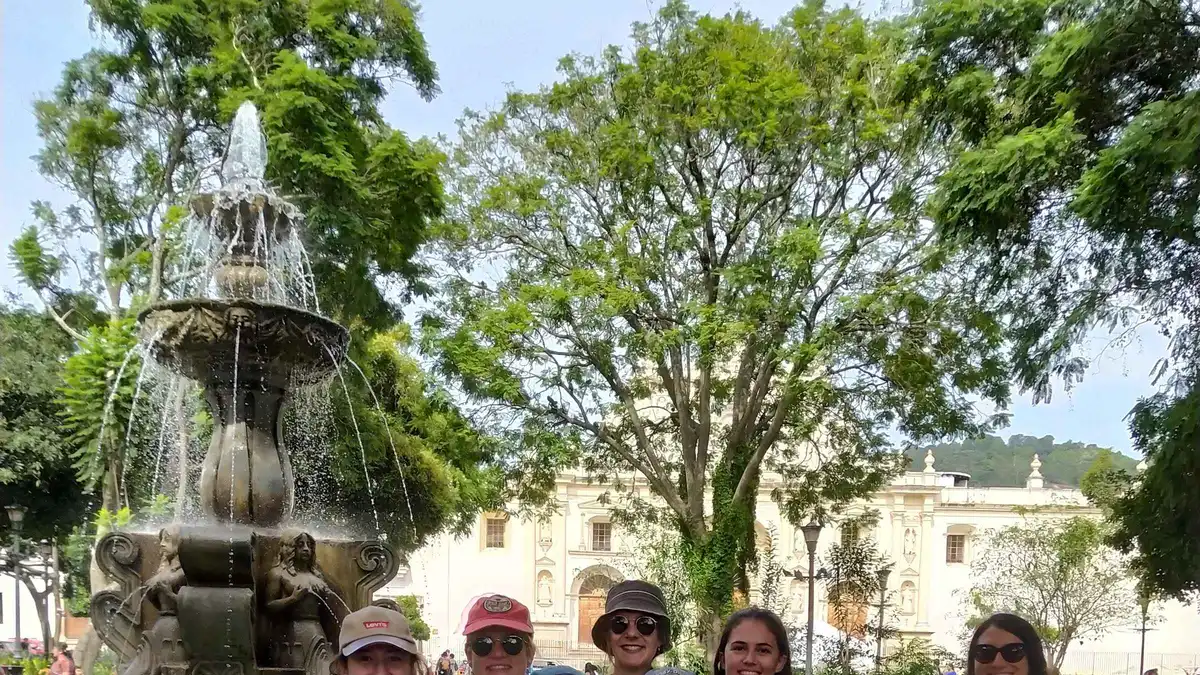
Antigua Guatemala: City Highlights Guided Walking Tour
2.5-hour small-group walk through the grid with a licensed guide; the fastest way to make the ruins and churches mean something.
Check Availability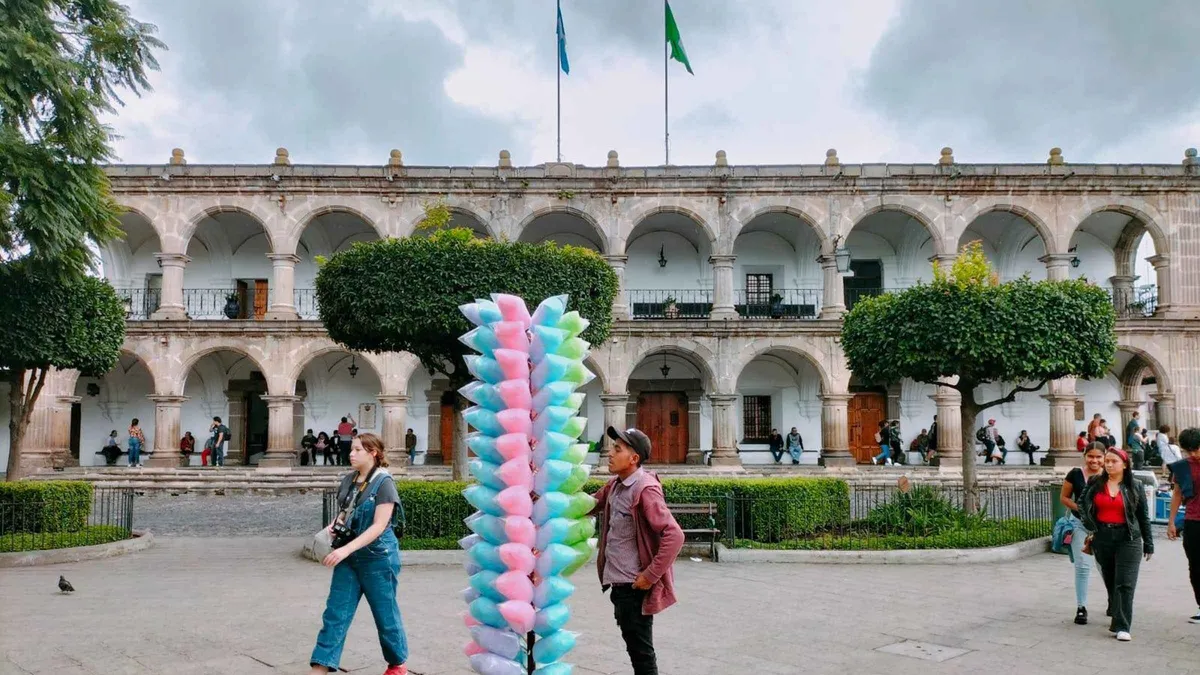 from $25
Antigua walking tour: Highlights, history, culture.
A cheaper 2.5-hour walking tour over the same ground as the top-rated one; fine if you just want orientation.
Check AvailabilityPrices, ratings and details are the platform's own. dollar figures are the listed prices — the platform bills in your account's currency.
What the Santa Catalina Arch Is
A bridge before it is a monument
Construction began in July 1693, commissioned by the Convento de Santa Catalina so that cloistered nuns could cross the street without being seen. Technically it is a bridge, not a gateway. It runs 23 m long in baroque style and spans 5a Avenida Norte, the street most people call Calle del Arco.
Ownership is split today. The arch itself and the church nave belong to the municipality, while the former convent next door is now the private Hotel Convento de Santa Catalina Mártir. That is why there is no door to knock on.
The monument you photograph is simply the street going about its business.
The corridor it anchors
The street under the arch is described as the city's most recognizable pedestrian landmark corridor, running from the arch toward the park. The whole walk between Parque Central and La Merced passes under it, and the shops, cafes and cobblestones along the way are half the pleasure. The arch and its street belong to the UNESCO World Heritage listing of Antigua from 1979, so you are standing inside a protected colonial grid, not beside an isolated monument.
Treat the corridor as the attraction and the arch as its hinge.
The hotel that owns half the story
The convent that built the arch never left the street. Its cloister now operates as the private Hotel Convento de Santa Catalina Martir, which means one side of the bridge is a working hotel rather than a museum. Practically this matters twice.
First, there is no arch museum to enter, the story lives on the street. Second, the hotel's doorway and corridor are part of the famous photo angles, which is why photographers linger at its edge. The arch and the church nave belong to the municipality, so the part you walk under is public ground, open at every hour the street is open.
Practicalities under the arch
The practical layer is short because the sight is a street. There is no ticket gate, no queue management and no accessibility statement published by any authority, so wheelchair users should plan around the cobbles, which are the real obstacle in the corridor rather than the arch itself. The city sits at 1,530 m, so the evening hour that makes the arch photogenic also makes it cool, and a light layer earns its place in a daypack.
Shade along the corridor is patchy, hats in the dry season earn their keep, and the usual city caution about phones and bags applies as much here as anywhere, with the tourist police presence in the city as backstop. None of this is printed on any official page, which is exactly why it is here.
The Clock, Handled Honestly
The one date nobody should print
The clock was not part of the original design of the arch. It was added later, with a small tower built on top to hold it. When exactly it went up depends on which source you read, and the sources disagree with each other.
This guide prints no installation year, and you should distrust any guide that does. What is agreed is simple. The clock is French, and it must be wound by hand every three days.
That maintenance ritual is the reason it still runs at all, and it is a nicer fact than any disputed date.
Stoppage and repair
The 1976 earthquake stopped the clock. It stayed silent until a repair brought it back in 1991. The arch structure itself carries a restoration dated 2017, the most recent documented work on it.
So when you look up at the small tower, you are looking at a French movement that died in a quake, waited fifteen years, and was restarted by hand. That story is worth more than the postcard.
How to Photograph It
The classic frame
The postcard shot is taken from Calle del Arco looking along 5a Avenida Norte with Volcán de Agua centered under the arch. Go early, before traffic and tour groups fill the frame. By evening the low sun puts Agua in silhouette, so the clean volcano shot is a morning one.
No official rule restricts tripods on the street, but this is a working pedestrian corridor, so keep it passable and step aside when you frame. The arch is free and open at all hours, which means the only limit on your shot is the light.
Three angles most people miss
First, stand on the park side looking north so people and vendors fill the frame under the arch. Second, try the hotel doorway on the north side, which gives you extra height and a cleaner line down the street. Third, come back after dark, when the arch is lit and the street empties out for a warm, quiet version of the same view.
These are our suggestions worked out from the street layout, not an official guide, so experiment around them.
Etiquette with a camera
No official rule restricts photography on the street, and there is no permit desk to consult. The etiquette is the corridor's. Step into doorways when you frame, keep tripods out of the middle at busy hours, and ask before photographing vendors close up.
During processions and festivals, the carpets are devotional objects before they are photo opportunities, so shoot from the edge and never walk over one.
How Much Time to Give the Arch
No authority publishes a visit length for a street landmark, so the routings below are our own door-to-door estimates.
Three ways to do it
Pick between the short pass-through, the full corridor walk and the guided version.
| Routing | What you get | What it skips | Door to door |
|---|---|---|---|
| Photo stop | The classic Agua-under-the-arch frame from Calle del Arco | The convent story and the corridor | 10-15 minutes |
| The corridor walk | The arch plus the full 5a Avenida stroll from Parque Central to La Merced with the shops between | The ruins off to the sides | 40-60 minutes |
| With a guided walk | The highlights tour explains the nuns, the quakes and the clock in context | Deep photo time, the guides keep moving | The arch sits inside a longer circuit |
The Arch in Seven Dates
The documented life of the arch, with the one contested date left out on purpose.
-
July 1693
Construction begins
Commissioned by the Convento de Santa Catalina so cloistered nuns could cross the street unseen. [Spanish Wikipedia, Arco de Santa Catalina, read for this guide]
-
Colonial era
A working bridge for a convent
A 23 m baroque bridge over the street now called Calle del Arco. [Spanish Wikipedia]
-
1976
The clock stops
The earthquake stops the clock. [Spanish Wikipedia]
-
1991
The clock runs again
Repaired and restarted after 15 silent years. [Spanish Wikipedia]
-
1979
UNESCO listing
The arch becomes part of the World Heritage inscription of Antigua. [Spanish Wikipedia]
-
2017
Restored
The structure carries a restoration dated 2017. [Spanish and English Wikipedia]
The sources here are the Spanish and English Wikipedia articles on the arch, read for this guide, with the clock installation year omitted because the sources conflict.
Simple rules for a street that never closes.
Do
- Come early for the empty Agua frame.
- Walk the corridor from the park to La Merced under and past the arch.
- Look up for the clock tower and its French movement that needs winding every three days.
- Pair it with Parque Central, they are five minutes apart.
- Return after dark for the lit arch and the quiet street.
Don't
- Don't look for a ticket office, entrance or interior, there is none.
- Don't block the street with a tripod at busy hours, it is a working corridor.
- Don't trust any guidebook that dates the clock, the sources conflict.
- Don't expect a viewpoint platform, the best frame is from street level.
- Don't climb on the arch or its walls, it is a heritage structure, not a viewpoint.
Five Things Most Visitors Do Not Know About the Arch
The details that change how you look at it, each tied to its source.
The details
- The arch exists because cloistered nuns needed to cross the street without being seen, which is why it connects two convent buildings [Spanish Wikipedia, Arco de Santa Catalina]. - It is technically a bridge, 23 m long, not a gateway [Spanish Wikipedia]. - The clock is French and must be wound every three days, a ritual that has kept it alive across earthquakes [Spanish Wikipedia]. - The 1976 earthquake stopped the clock for 15 years before its 1991 repair [Spanish Wikipedia]. - The municipality owns the arch and the church nave, but the former convent is now a private hotel [Spanish Wikipedia].
The arch sits at the center of a compact corridor in the middle of the colonial grid. Everything on this map is within a few minutes on foot.
Next Stop From the Arch
Walk minutes are our estimates from the GPS distances.
Parque Central
The main square is one and a half blocks from the arch, with the 1737 mermaid fountain at its center and benches under the trees. It is the natural start or end of the corridor walk, see the park guide.
About 250 mLa Merced
Two blocks north stands the baroque church whose facade survived the 1773 earthquakes practically unscathed, with the huge 27 m fountain beside it. Full details in La Merced.
About 220 mCerro de la Cruz
The viewpoint above the city looks back down at the arch corridor and the whole colonial grid. The tourist institute puts the signposted trail at 20-30 minutes from the center, see the views page.
About 800 m to the trailheadSanta Catalina Arch: Questions
Why is the Santa Catalina Arch famous?
It began as a private bridge for cloistered nuns crossing 5a Avenida Norte unseen, and became the city's most photographed view with Volcán de Agua framed under it. It is part of the UNESCO World Heritage listing of Antigua from 1979. The background is in the history section and a guided walk tells it in context.
Can you go inside or climb the Santa Catalina Arch?
No. There is no interior, staircase or viewpoint platform open to visitors. The arch functions as a street bridge, so the experience is standing under it and photographing it from the road. More in the what section.
Is the Santa Catalina Arch free to visit?
Yes, completely. There is no ticket, gate or fee of any kind, and the street is open around the clock. The figures are laid out in the money table.
When was the clock on the arch installed?
The honest answer is that nobody can say with confidence. The clock was not in the original design, and the sources disagree on the installation year, so no responsible guide prints one. We explain what is actually agreed in the clock section.
What is the best time to photograph the arch?
Early morning gives you the empty frame with Volcán de Agua centered under the arch before the crowds arrive. After dark the arch is lit and the street empties for a second, warmer shot. Angles are in the photography section.
Why are there so many ruins in Antigua Guatemala?
The 1773 Santa Marta earthquakes badly damaged the city and the capital was moved away, leaving the convents and churches behind as ruins. The arch survived because it kept its working function and has been restored, most recently with work dated 2017. The cathedral ruins show what the quakes did up close.
Where do you stand for the Volcan de Agua photo?
In Calle del Arco itself, a short distance south of the arch, looking north so the cone lines up under the span. Morning gives the cleanest light on the volcano. The angles are worked through in the photography section.
Where the Arch Fits in an Antigua Day
The hinge of the center day
Treat the arch as the hinge of a day in the center. Start at Parque Central, walk north for the classic arch photo with Agua under it, continue two blocks to La Merced, then swing back south for the cathedral and the other ruins. That is most of a morning, and the full pattern is on the things to do hub.
If mornings are your only tour time, keep the arch for the evening instead. It is lit after dark, the street quiets down, and the frame is a different one. More routes sit on the walks page, and the homepage keeps the whole guide in one index.
At processions and festivals
The tourist institute singles out this corridor when it describes the city's street carpets and Holy Week processions, and the arch stands on the route the processions take toward the park and the churches. If your dates land in Easter week, expect the corridor to change character completely, with crowds, alfombras and access that follows the procession calendar rather than any published schedule. Come at dawn on a procession morning and you may have the famous frame to yourself, carpeted.
The season is its own subject, see the Holy Week page before planning around it.
The Arch on Film: the Street, the Clock and the Hotel
Three verified videos that show the arch and its corridor, including a look inside the convent hotel that owns the north side of the bridge.
Beautiful Antigua Hotel Tour! // Hotel Convento Santa Catalina // Antigua, Guatemala
A walk through the convent hotel behind the arch, the private half of the story this page tells.
Video: REDROMINAWHAT TO DO: Santa Catalina Arch in Antigua, Guatemala: Guatemala VLOG Ep. 6
A visitor's ground-level look at the arch and the street around it.
Video: The Traveling Mom BossAntigua Sightseeing At Santa Catalina Arch/Cerro De La Cruz, Exploring Our Hostel, & Hiking Pacaya!
Pairs the arch with the Cerro de la Cruz viewpoint, the two stops this page routes together.
Video: oybyVideos load from YouTube only when you press play.
We may earn a commission if you book through one of our links, at no extra cost to you. Full affiliate disclosure