 Antigua Guatemala City Guide
Antigua in 1 Day
Antigua in 1 day is a compact walking loop that takes in the main square, the cathedral, the Santa Catalina Arch, La Merced, a market lunch, the Casa Santo Domingo ruin complex and the dusk view from Cerro de la Cruz. Every stop below carries a time and a cost position so you know where your money goes before you set out. Walking minutes between stops are our own estimates, not official figures.
Quick answer The one-day loop, what it costs, what to book
One day covers the grid loop on foot: Parque Central, the cathedral, the Santa Catalina Arch, La Merced, lunch in the market, the Casa Santo Domingo ruin complex and the dusk view from Cerro de la Cruz. The route runs over flat cobbled streets plus one hillside climb at the end of the day, roughly 6 km of walking in total, all of it inside eight blocks of the main square except the market and the hill. Every fixed entry price on it is either free or unpublished, which is close to unique for a city this photographed.
Key takeaways
- You can do this loop alone with a map, or join the guided walk that starts at the central fountain, a small-group 2.5-hour highlights tour at $25, rated 5.0 by 658 travellers with free cancellation up to 24 hours before.
- Money is simple here but cash matters. The headline sights are free or quote no published fee, so food and transport are your real costs. See what it costs and our full Antigua price guide, and note the ATM fees before you rely on a machine.
- The order matters. Shoot the arch before the mid-morning tour buses arrive and save the Cerro de la Cruz viewpoint for dusk. If one day feels tight, the unhurried version is our two-day Antigua itinerary.
How the day is built
Why this order works
The grid is small and flat, and the four headline sights sit within about 400 metres of the main square, so you can chain them together without ever doubling back. The order here is deliberate. The arch comes early because tour buses start arriving from mid morning and the classic shot down 5a Avenida Norte is far better without crowds in it.
Lunch sits west at the market, where the buses and the chicken-bus terminal live, so you eat where prices are local. Casa Santo Domingo takes the hot early afternoon because most of it is under roof and shaded courtyards suit the midday sun. The viewpoint takes the cool end of the day, when the light drops over the grid and Volcan de Agua catches the last sun.
In total the walking is roughly 6 km spread across the day, plus the 20 to 30 minute climb to the cross that INGUAT's own trail description gives. All of those are estimates, not survey figures, and walking minutes on this page are our estimates. The distances deserve numbers, even estimated ones.
Square to cathedral is about 5 minutes, cathedral to arch about 5, arch to La Merced under 4, La Merced to the market about 8, the market back to Casa Santo Domingo about 15 if you walk it and a 5-minute tuk-tuk if you do not, and the trailhead for the cross is 20 minutes from the ruin door, before the climb itself. No leg is longer than 20 minutes, no leg needs a vehicle, and the two blocks between the arch and the square hold more photographed doorways than most cities manage in a suburb, so build in ten unscheduled minutes per hour or you will spend the day catching up to the clock.
What gets dropped and why
One day cannot hold everything. The other convent ruins, Capuchinas and Santa Clara, plus the pilgrimage church of San Francisco, wait for a second visit, and cramming them in would cheapen the ones you do see. The ridge parks beyond town and the volcano hikes are out of one day's reach entirely.
For the full list of what the city offers, see things to do in Antigua, and for the version that keeps the ruins belt and a half-day trip, use our two-day itinerary.
Arrival: from the airport to the start line
Most visitors arrive from Guatemala City airport, 40 to 45 km away, a trip of 45 minutes to 1h30 off peak and longer in rush hour. A pre-booked shared shuttle is $15 per person on Adrenalina's own published price, walk-up shared shuttles at the airport run about Q150 ($19.63), and a private transfer costs about $50 (Q382) for up to four people. Once you are dropped in town you will not need wheels again, because everything below is on foot.
For tired legs the fallback is a tuk-tuk at the municipal tariff of Q10 ($1.31) per ride within the city. Drivers are not metered and commonly ask visitors more, so agree the fare before you get in. The full arrival picture, shuttles versus taxis versus the public bus, lives on airport to Antigua, and the in-town options on getting around.
Timing the start
Begin at 08:30. The square is coolest and emptiest then, the cathedral doors are open, and the arch photos are far better before the tour buses. An early start also protects the afternoon, because Casa Santo Domingo deserves a full two hours and the viewpoint wants you at the top in the hour before dark.
If you would rather walk the loop without a guide at all, our self-guided walking routes are the free alternative and follow the same streets. The month shifts the plan a little. November to April is the dry season, when the 08:30 start is about light and cool air rather than rain arithmetic.
In the wet season, May to October, the morning start becomes close to a rule, and July often brings the canicula, a mid-season dry spell the national met office forecasts each year, which can hand you a dry week in the middle of the rains. April is the warmest month with an average high near 27°C, and September the wettest at 311 mm across about 28 rainy days, thirty-year averages worth glancing at on the weather page.
What goes wrong on one-day attempts
Four things eat a one-day visit. The first is altitude: at about 1,530 m the sun is stronger than the temperature suggests and the afternoon heat lands harder on walkers, so carry water and use the square's shade. The second is church timing, because neither the cathedral parish nor La Merced publishes hours, and a service empties a visit of its purpose, so slip into the other half or move on and come back.
The third is cash, since the market, tuk-tuks and donation boxes take no cards. The fourth is the afternoon rain in the wet season, which is why the ruin sits after lunch in this plan. If anything goes properly wrong, the tourist-assistance service ASISTUR answers around the clock on 1500 with English-speaking staff, and tourist police patrol the grid, more on safety and scams.
What the day costs: the price comparison
The fee table
Read this before booking anything. It lists every published fee position on the route and where each figure comes from, because most in-city entry fees are simply not printed by any official source.
| Stop | Published fee | The honest position |
|---|---|---|
| Parque Central | Free | Public square, open around the clock |
| San Jose cathedral | None published | No fee printed by any official source, carry small notes for the donation box |
| Santa Catalina Arch | Free | The arch is a public street bridge, no ticket exists |
| La Merced church | None stated | No parish website exists, daylight visits are the practical window |
| La Merced rooftop | About Q35 ($4.58) | Reported by Que Pasa magazine, a secondary source, not an official tariff |
| Mercado lunch | Free entry | You pay for what you eat, cash only |
| Casa Santo Domingo museums | Not stated online | Price confirmed at the museum desk on +502 7820-1220, differs for nationals and foreigners |
| Cerro de la Cruz | Free per local reports | No municipal tariff exists online |
What you actually spend
In practice the day is cheap by design. The two fixed costs you can plan for are food and, if you want one, the $25 small-group walking tour. Tuk-tuks are the only transport you might use, and the municipal tariff is Q10 ($1.31) per ride within the city when drivers agree to it.
They are not metered and they commonly ask visitors more, sometimes Q15 ($1.96) or higher, so set the price before you get in and expect cash. If the table above leaves gaps, that is honest: the cathedral, the church entries and the Casa Santo Domingo museums publish no price online, so carry small notes for donation boxes and ask at each door.
Cash and ATMs
Bring cash and plan your withdrawals. ATMs in Antigua carry fees commonly reported at Q40 ($5.24) at BAC and Q49 ($6.41) at 5B, and the fees look fixed per withdrawal, so one large withdrawal beats several small ones. Markets, tuk-tuks and comedor stalls are cash only, while hotels and larger restaurants take cards.
Check machines for tampering and avoid drawing money late at night. A cheaper option if one day is all you have is the alternative walking tour, also $25 with free cancellation up to 24 hours before. Every figure above was re-checked against official and reported sources in Q3 2026.
A worked budget
Add up only what is actually printed and the day stays light. The optional guided walk is $25. The rooftop at La Merced is reported at about Q35 ($4.58).
One tuk-tuk ride back from the market is Q10 ($1.31) at the municipal tariff, perhaps Q15 ($1.96) in practice. Everything else on the route either carries no fee or publishes none, and what you put in a donation box is between you and the box. That is about $31 of printed extras before food, or $6 if you skip the tour, which is why nobody comes to Antigua for the ticket prices.
The money that matters here is food, and what the city costs day to day works that side out.
The day, stop by stop
The loop runs about 6 km on foot plus the viewpoint climb at the end. Walk minutes between stops are our estimates, not official figures, and the times are a rhythm rather than a schedule. Start early, keep the pace honest, and let the last hour of light belong to the hill.
-
Parque Central
FreeStart where the city started. The square has carried the names Plaza Mayor, Plaza Real and Plaza de Armas over its life, and locals still simply say the parque. In the middle stands the Fuente de las Sirenas, the mermaid fountain, built by Diego de Porres in 1737.
Look up as much as the fountain. Across the south side the Palacio de los Capitanes began in 1558 as the royal houses of the Spanish administration and today houses government offices, while the City Hall on the north side dates to the 1750s. Benches in the shade make this the best coffee stop of the morning. Give it 20 minutes. If you want a paper map, the INGUAT tourist office stands two blocks east at 5a Calle Oriente 11.
The guided walking tour also meets at this fountain, at the mermaids, if you decide you want a guide after all. Full details on our Parque Central page.
Two practical notes. The fountain is the meeting landmark for half the tours in the city, so if you are meeting anyone, meet here. And the palacios around the square are government buildings, not museums, their interest is the facades and the arcades, so do not look for a door to walk through, there is not one.
walk about 5 min to next
-
San Jose cathedral
No fee publishedThe cathedral is really two buildings. On the park side the working parish of El Señor San José holds services, and behind it the ruined basilica of the old cathedral stands open to the sky, its vaults dropped by the 1773 Santa Marta earthquakes.
The story is long. First built from 1545, rebuilt and consecrated in 1680, elevated to a metropolitan cathedral by 1743, then wrecked in 1773 when the colonial capital itself moved to Guatemala City. Pedro de Alvarado, the conquistador of Guatemala, was reinterred here in his niche in December 2007, and you can find the plaque near the entrance.
No official source publishes a fee for either half, so carry small notes for the donation box. Allow 30 to 40 minutes to see both halves properly. Our cathedral page covers the crypts and tunnels in the ruins in detail.
The ruined half is entered from behind the parish, through the doorway on Calle de los Pasos, and it is the side worth the time, arches open to the sky with the volcano behind them. If a service is under way in the parish, walk the ruins first and cross over after. Shoulders and knees covered is the working rule in both halves. The parish half holds the plainer treasures, a carved font and the side altars where the congregation actually prays, and it costs nothing to be quiet in it for five minutes before you move on.
walk about 5 min to next
-
Santa Catalina Arch
FreeWalk north into 5a Avenida Norte and the city's signature image opens ahead of you. The arch was built from July 1693 so cloistered nuns of the Convento de Santa Catalina could cross the street unseen between their buildings, and it still works today as a 23 metre bridge over the roadway.
The clock on top was never part of the original design, and the sources genuinely disagree about when it went up, so we print no year for it. What is agreed is that it was restored in 2017 and still needs winding every three days.
This is the photo stop, and timing is everything. Come now, before the mid-morning tour buses, and shoot east through the arch to Volcan de Agua. Fifteen minutes unless the light is good, in which case stay longer. More history on our Santa Catalina Arch page.
The street under the arch is 5a Avenida Norte, known popularly as the Calle del Arco, and it is a working road, so shoot from the sidewalk on either side rather than standing in it. In Easter week this same corridor carries the processions and sawdust carpets, which our Semana Santa page covers, and the crowds then are of a different order entirely. The former convent behind the arch is a private hotel today, so the cloister is not open to walk-in visitors.
walk about 4 min to next
-
Iglesia y Convento de La Merced
Church: none stated. Rooftop about Q35 ($4.58), reportedContinue north and west to the most photographed facade in the city, the yellow-and-white Churrigueresque front of La Merced. Construction ran from 1749 to 1767, and that near-newness explains its luck. When the 1773 earthquakes flattened much of Antigua, La Merced came through practically unscathed because it had barely been finished.
Inside the convento courtyard sits the Fountain of los Pescados, 27 metres across and among the largest colonial fountains in Latin America. The rooftop walk gives the best view over the grid's roofs and is reported at about Q35 ($4.58) for foreigners, a figure from Que Pasa magazine, a secondary source rather than an official tariff.
Allow 45 minutes with the rooftop. This church is the origin point of two major Holy Week processions, which our La Merced page explains.
The church sits a block north of the arch corridor, close enough that no route between them ever feels like walking. The fountain of los Pescados stands in the convento courtyard, not the churchyard, so ask at the convento door rather than hunting for it. And since no official source states church hours at all, treat daylight as the window and morning as the quiet part of it. The church is also a station on the Brother Pedro route, the pilgrimage path of the city's own saint, if you see walkers with credentials, that is what they are collecting.
walk about 8 min to next
-
Lunch in the mercado
Free entry, cash for foodHead west out of the tourist grid for lunch. The municipal market sits on 3a Calle Poniente at the west edge of town, about 8 minutes past La Merced on foot, with the chicken-bus terminal filling the lot behind it. No official source publishes market hours, but mornings are the practical window and noon is still lively.
The comedor stalls serve set lunches, plates of the day that cost a fraction of what the 5a Avenida restaurants charge, and the benches are full of stallholders and bus drivers, which is always the right sign. Our what to eat page covers the dishes worth ordering.
Bring small notes, because it is cash only and change runs thin. The walk back east afterward is about 15 minutes, or flag a tuk-tuk at the Q10 ($1.31) municipal tariff. Our market explained page has the layout.
Order the day's plate rather than anything that needs a long look from the cook, sit where the stallholders sit, and keep your bag off the back of the chair like you would in any market anywhere. The artisans' side of the market, textiles and wood and jade, sits in the same block, so a half-hour of souvenir browsing costs nothing and beats the fixed-price shops on the square for choice.
walk about 15 min to next
-
Casa Santo Domingo
Price not stated online, pay at the museum deskThe afternoon belongs to the single biggest ruin complex you can walk through in town, a ruined monastery turned museum-hotel at 3a Calle Oriente 28 A. Museums open Monday to Saturday 9:00 to 18:00 and Sunday from 11:00, and the official site warns they may close before the scheduled time without prior notice, so go earlier rather than later.
Inside are six permanent museums plus two galleries: crypts and cloister in the archaeological area, colonial art, pre-Columbian pieces, liturgical silver and a 19th-century pharmacy museum. No guided tours are offered, you wander at your own pace, and two hours disappears quickly.
The entry price is nowhere online, so confirm at the museum desk on +502 7820-1220. It differs for Guatemalan nationals and foreigners. Details on our Casa Santo Domingo page.
Come at the start of the window rather than the end, because the official warning that the museums may close before the scheduled time without notice is not a formality. The lanes inside run downhill through the cloister and the crypts, and the exit spills you back toward the calendar of the hotel's own ruins, so two hours is a floor if you care about the museums and closer to 90 minutes if you mostly want the stones.
walk about 20 to the trailhead min to next
-
Cerro de la Cruz at dusk
Free per local reportsFinish on the hill. INGUAT, the national tourism institute, describes a signposted trail taking 20 to 30 minutes from the historic centre up to the cross above the grid, with the city's most iconic views and Volcan de Agua framing the postcard exactly as it does through the arch you shot this morning.
No official tariff or hours exist for the viewpoint. Local reports describe free entry and roughly 6:00 to 18:00, so plan to go up in the hour before dark and come down before dusk itself, because the trail is unlit. The climb is steady rather than technical, but at 1,530 metres of altitude it will raise your pulse.
At the top the whole day lays itself out below you, the grid streets running dead straight toward the volcano. Then walk down for dinner along 5a Avenida Sur. Our where to eat page and the restaurants worth booking both cover that stretch, and the viewpoint guide has the trail details.
The trailhead is at the top of 1a Avenida Norte, the avenue that runs dead north from the arch end of town, and the path climbs through trees the whole way. Start the climb no later than an hour before sunset, take the descent seriously because the steps are uneven and unlit, and if the afternoon rain has been through, expect mud on the upper stretches. Photographers should know the light falls behind the volcano at the end of the day, so the grid glows and the sky burns, while the arch in the morning is a backlit subject, the two ends of this route are deliberately the two ends of the light.
Where to eat along the route
The plan builds in one market lunch and leaves the evening open, so here is how the eating actually falls out along the walking line.
Lunch belongs to the mercado because the food is cooked for people who work beside it, the portions are set-plate rather than plated, and nothing on the tourist grid competes on price. Dinner is the opposite: the stretch of 5a Avenida Sur between the arch and the market end of town holds most of the courtyard restaurants visitors actually mean, and the walk home from the viewpoint drops you straight onto it. Our restaurant shortlist names the tables worth planning an evening around, and where to eat sorts the whole city by mood and budget.
Two food notes. First, the dishes to try are the ones the food page details, pepian above all, and the market comedors cook them honestly, so do not save the national dishes for the fancier courtyards. Second, coffee: the city runs on it, and a mid-morning stop between the arch and La Merced is the natural pause in this route, the café shortlist covers both the quick counter and the sit-down courtyard kinds.
Meals at market stalls are cash only, restaurants increasingly take cards, and tipping practice is the same gentle 10 percent round-up you would guess at.
If your one day starts at noon
Not everyone gets the 08:30 start. Overnight buses, flight days and morning tours from Guatemala City push half of all one-day visits into the afternoon.
Here is the honest reorder. Drop the market lunch and eat light on the square instead, because the market rewards mornings. Run the arch, La Merced and the cathedral between noon and three, when their doors are reliably open and the tour buses have thinned.
Take Casa Santo Domingo at three, since under-roof rooms age well in the afternoon and nothing there closes on a clock you can plan around anyway. Then choose: the viewpoint at dusk if the sky is clear, or dinner early and the viewpoint first thing tomorrow if it is not. What the reordered day loses is depth, the cathedral gets 20 minutes instead of 40, and that is the trade.
A self-guided walk in the late afternoon still covers the photogenic half of the grid in golden light, which is the part most visitors actually came for. If even the reordered day is impossible, the minimum honest Antigua is the arch, one church and the sunset from the cross, about two and a half hours in all, and it is better done slowly than ruined by a checklist. And if the day keeps shrinking on you, the city guide homepage carries the how-many-days planner that settles the one-day-versus-two question before you arrive.
One day vs two days: what the second day buys
A single day fits the grid loop and one serious ruin, while a second day unlocks the ruins belt and a half-day trip beyond town. The two-day figures come from our own two-day itinerary, so both columns describe the same walking pace and the same fee positions.
| One day | Two days | |
|---|---|---|
| The grid loop | Done at pace, about 6 km | Done at half speed with a proper lunch |
| One ruin done properly | Casa Santo Domingo, 2 hours | Casa Santo Domingo plus the ruins belt of Capuchinas, Santa Clara and San Francisco |
| The dusk viewpoint | Cerro de la Cruz, if the sky holds | Cerro de la Cruz plus the ridge parks beyond town |
| A half-day out | Not realistic | Pacaya volcano or the Hobbitenango ridge |
| What it costs in entries | Free to unpublished | Free to unpublished, plus the half-day out |
The verdict is simple. One day shows you Antigua, two days let you use it. For the second day built out stop by stop, see the two-day itinerary. The honest middle position is one day plus one evening, which this route gives you for free, since the last stop is the best thing in the city after dark.
If it rains on your one day
The wet-season pattern
September is the wettest month in the calendar, averaging 311 mm of rain across about 28 rainy days in thirty years of weather data, and the wet season runs roughly May to October. The practical pattern, though, is kind to early risers: a dry bright morning followed by a wet afternoon. That single fact should reshape your day.
Run the grid loop early exactly as planned, and keep the ruin, which is mostly under roof, for the wet hours when the streets empty. Carry a light rain layer and expect cooler temperatures than the lowlands, with nights in the 50s Fahrenheit year-round at this altitude.
Four swaps when the sky opens
You do not need to abandon the day, only reshuffle it.
- Casa Santo Domingo first. The crypts, cloister and galleries are under roof, so swap it with the market hours and let the rain fall on someone else's schedule. Details on Casa Santo Domingo.
- The market lunch becomes the market plus the covered food stalls. It is a longer circuit, drier, and still cash only.
- The viewpoint moves to tomorrow morning if a second hour exists anywhere in your schedule, because a wet cross with no view is 40 wasted minutes, and the weather page keeps the monthly arithmetic you need for that call.
- A long café afternoon. Antigua's coffee houses are built for exactly this, and our cafés and coffee shops page picks the ones worth an hour of rain.
- The full indoor shortlist lives on the rainy-day plan, and if the whole trip is weather-led, build the second day around it with the two-day itinerary.
The small print that decides the day
Not one of these lines is printed on a sign at any of the stops, and each one cost somebody a morning to find out.
These are the published-and-never or checked-and-surprised facts of the one-day route, collected so the surprises happen to someone else.
- No church on this route publishes its hours. The cathedral parish opens around Mass times, La Merced has no parish website at all, and the practical rule is daylight, door open, go in.
- The Casa Santo Domingo museums may close before the scheduled time without prior notice, in the official site's own words, which is why this plan puts them at 14:00 and not at the end of the day.
- No official price exists for the cathedral, the La Merced church, the Casa Santo Domingo museums or the viewpoint. The one printed tariff in town is the municipal Q10 ($1.31) tuk-tuk ride.
- Cerro de la Cruz has no official hours or tariff, local reports describe free entry from about 6:00 to 18:00, and the trail is unlit after dark, so the last hour of light is the deadline, not 18:00 on a clock.
- The municipal market publishes no hours, no market days and no hall layout, which is why lunch here is a rhythm, morning best, noon still lively, rather than a timetable.
- Tuk-tuks stop working about 22:00 according to the same local sources, so a late dinner does not get a ride home unless the restaurant calls one.
None of that should scare anyone off the day. Antigua's grid is small enough that being wrong costs a block of walking, not an afternoon, and the honest gaps are the reason this page exists. Where an official figure is missing we say so beside the stop itself, and the tickets and fees page keeps the same discipline across the city.
One last practicality, footwear. The grid is cobbled end to end, the market floor is wet in places, and the viewpoint path holds loose rock after rain. Anything with a grip sole handles all three, smooth city soles handle none of them, and this is the one packing decision that shows up in every hour of the plan.
The walks named in this plan
Two small-group walking tours cover the same ground as this route, priced as listed by the operators. Both carry free cancellation up to 24 hours before the start.
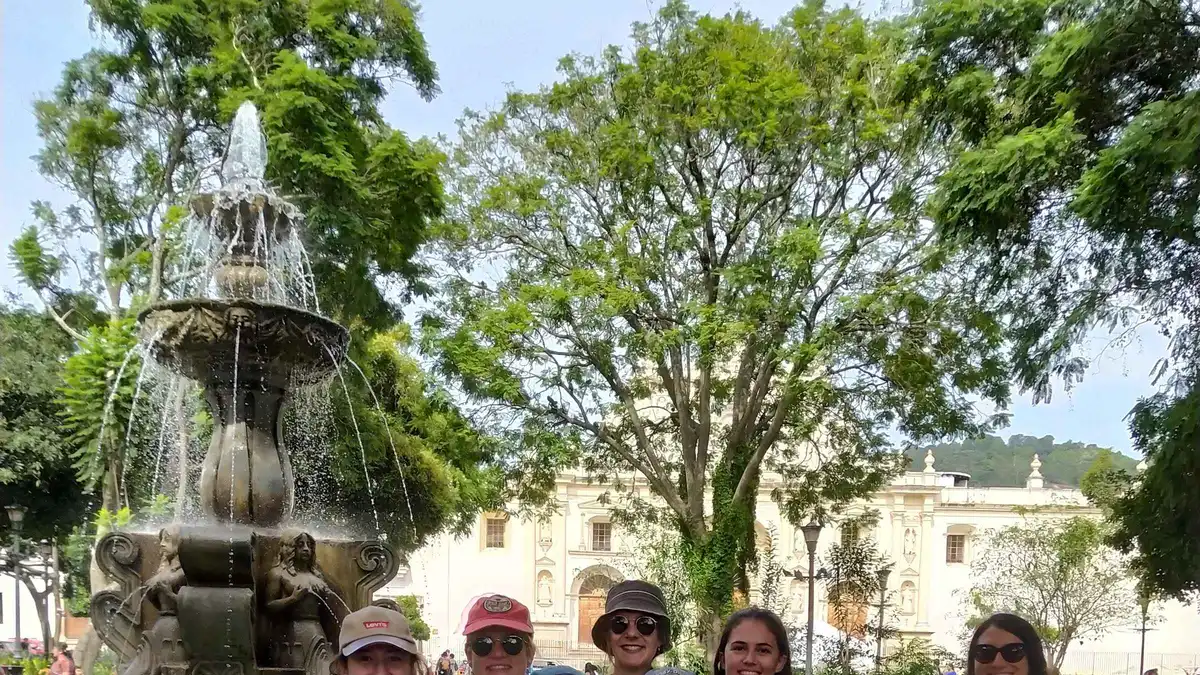 from $25
Antigua Guatemala: City Highlights Guided Walking Tour
2.5-hour small-group walk through the grid with a licensed guide; the fastest way to make the ruins and churches mean something.
Check Availability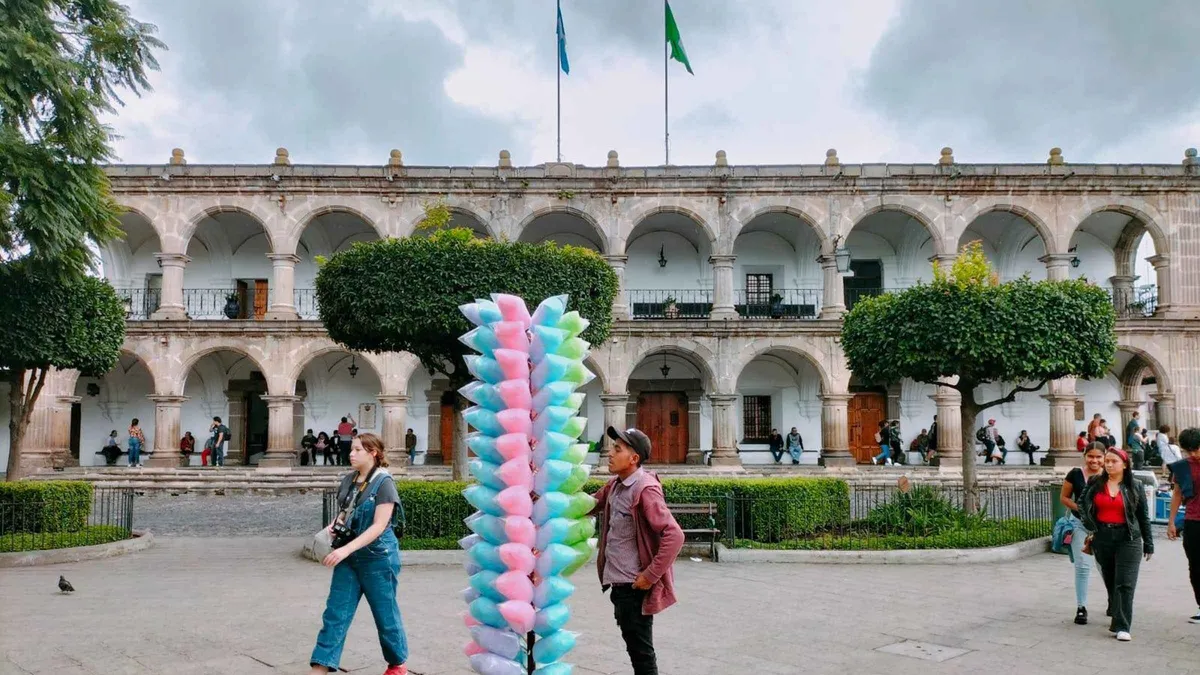 from $25
Antigua walking tour: Highlights, history, culture.
A cheaper 2.5-hour walking tour over the same ground as the top-rated one; fine if you just want orientation.
Check AvailabilityPrices, ratings and details are the platform's own. dollar figures are the listed prices — the platform bills in your account's currency.
The one-day route on one map
All seven stops in walking order, numbered as they appear in the day.
Where this plan goes next
If one day leaves you wanting more, these three pages take the plan further, and each one picks up where this route stops.
Antigua in 2 days
The same loop at half speed, plus the ruins belt of Capuchinas, Santa Clara and San Francisco and a half-day out of town. The two-day itinerary builds the second day stop by stop.
Where to sleep
Staying inside the grid means the whole route is on foot and no tuk-tuk fare ever enters the budget. Our where to stay page sorts the options by block and by budget.
Free Antigua
Most of this day is already free, from the square and the arch to the viewpoint. The free things to do list adds everything else that costs nothing.
One day in Antigua: questions
Is one day enough in Antigua Guatemala?
It is enough for the grid loop, the market and one serious ruin, done at a brisk but honest pace. It is not enough for the ruins belt of Capuchinas, Santa Clara and San Francisco, nor for a half-day trip out of town. If those matter to you, the two-day itinerary is the better plan. One day at the pace above leaves the evening for dinner without exhaustion, which is the test that matters.
What can you see in Antigua in one day?
Seven stops: Parque Central with its 1737 mermaid fountain, the cathedral and its ruined basilica, the Santa Catalina Arch, the church and rooftop of La Merced, a set lunch in the mercado, the Casa Santo Domingo museums and the dusk view from Cerro de la Cruz. That chain covers every headline sight inside the grid.
How much does one day in Antigua cost?
Less than you would expect, because the entries are free or unpublished. The real costs are food and, if you take one, the optional $25 walking tour. Watch the ATM fees, commonly reported at Q40 ($5.24) at BAC and Q49 ($6.41) at 5B, which is why one large withdrawal beats several small ones. The full breakdown sits in the cost table. Cards work at hotels and larger restaurants, but the day as planned runs on cash almost entirely.
Do you need to book anything in advance for one day in Antigua?
No. Nothing on this route is ticketed ahead, the ruins are pay-on-the-door and the churches take donations at the door. The only optional booking is the guided walking tour, which is worth reserving if you want the 08:30 slot because groups are small.
Is the one-day route walkable?
Yes. The grid is flat and the walking adds up to about 6 km spread across the day, plus the 20 to 30 minute viewpoint climb that INGUAT describes on its signposted trail. Walk minutes on this page are our estimates. If your legs give out, a tuk-tuk ride at the Q10 ($1.31) municipal tariff is the fallback, and getting around Antigua has the details. Cobbles are the only terrain warning, smooth-soled shoes slide on them in rain.
What if it rains on my one day in Antigua?
Expect a dry morning and a wet afternoon in the wet season, so run the outdoor loop early. Swap Casa Santo Domingo into the rainy hours, since the crypts and galleries are under roof, and keep a café afternoon in reserve. The full list of swaps is on the rainy-day plan, which also covers the Casa Santo Domingo timing. If the morning stays dry, run the outdoor loop exactly as planned and let the rain take the ruin hours, because the wet-season pattern is a dry morning and a wet afternoon more often than a washout.
Can I do the one-day route with children?
Yes, with two changes. Swap the Casa Santo Domingo museums for the courtyard and ruins alone, because the glass-case galleries test small patience, and let the market lunch run long, since tortilla stalls and fruit vendors are the most reliable child entertainment on the route. The viewpoint climb is manageable for school-age legs at an adult pace. Antigua with kids carries the full family version of the city.
Where should you eat on the one-day route?
In the market at midday and on 5a Avenida Sur at night, which is the order the walking line already follows. The market comedors serve set lunches built for stallholders, and the evening stretch between the arch and the viewpoint descent holds the courtyards people come for. Where to eat and the restaurant shortlist both sort it by budget.
One Day in Antigua, on Film
Three filmed versions of the same ground this route covers, useful for seeing the light, the crowds and the real walking pace before you commit a day to it.
1 Day in Antigua Guatemala 2022 | Things to do | 4K Vlog
A filmed one-day pass over the same ground as this route, from the square to the arch and beyond.
Video: NALBA TRAVELSWhat to Do in Antigua, Guatemala | 36 Hours Travel Videos
The New York Times' 36-hour cut of the city, close to the rhythm of this plan with more time for food.
Video: The New York TimesSolo Trip to Guatemala: 24 Hours in Antigua, Guatemala | One Day in Antigua
A solo 24-hour version for anyone arriving the night before and starting at first light.
Video: Just Chasing SunsetsVideos load from YouTube only when you press play.
Prices, hours and terms are set by the venue or operator and confirmed at checkout.
We may earn a commission if you book through one of our links, at no extra cost to you. Full affiliate disclosure