 Antigua Guatemala City Guide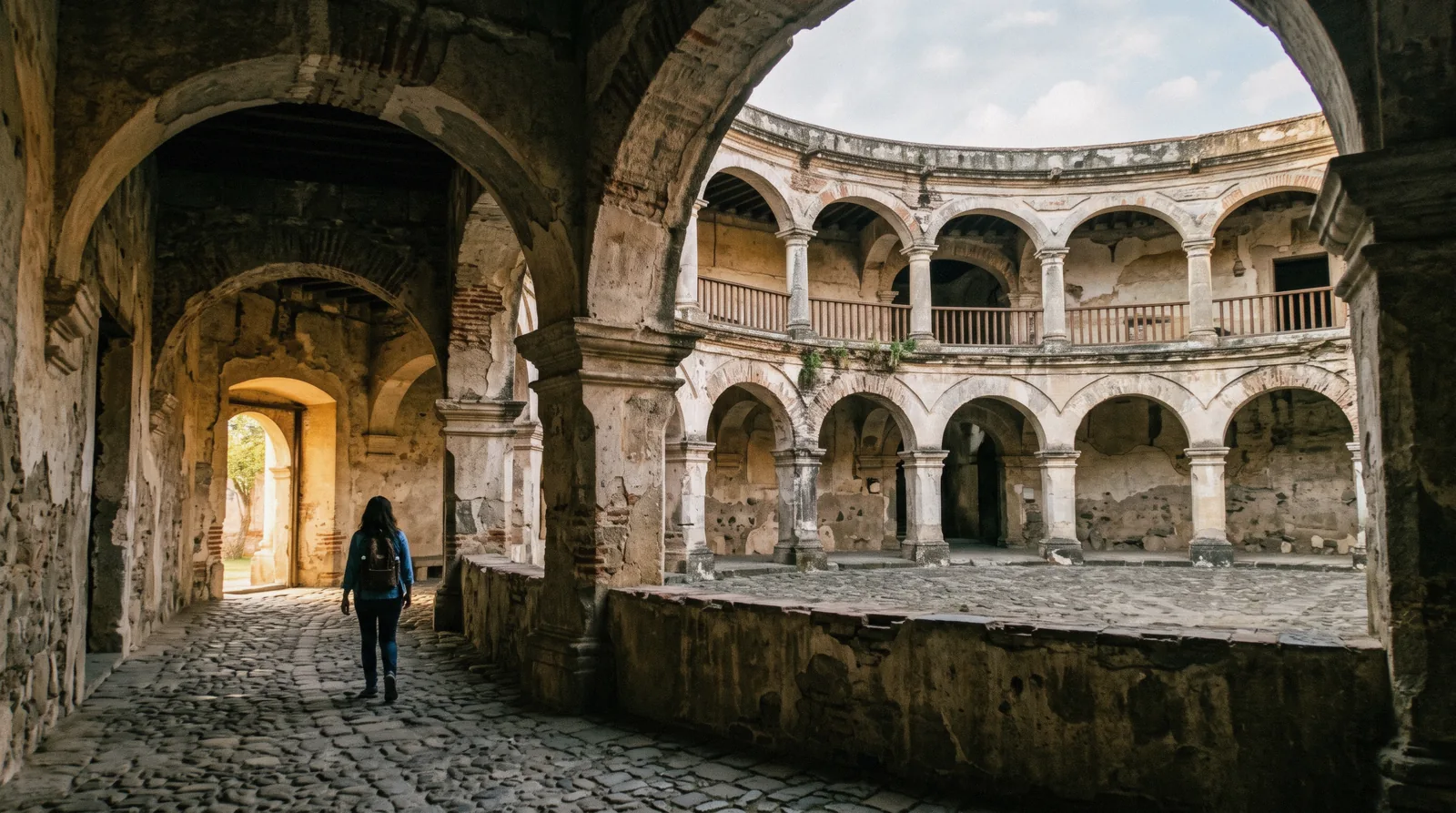
Convento de las Capuchinas
Las Capuchinas is the last convent built in colonial Antigua Guatemala, consecrated in 1736, and it survives as the city's best-restored convent ruin. Approved by King Felipe V in 1725, it is famous above all for its circular courtyard, a ring of nun's cells built around a central common chamber. The building was abandoned after the earthquakes of 1773 and now sits two to three minutes' walk north of the Santa Catalina Arch, protected by the CNPAG. Access is paid, but no tariff is published anywhere online, and no official source lists hours or closed days either. This page on las capuchinas antigua gives you the honest picture: what the fee situation really is, how the circular courtyard worked, how long to stay, and how to pair it with the rest of the Antigua Guatemala city guide in one morning. If you want the convent story told properly, the city highlights walking tour covers the whole convent system with a licensed guide.
Quick answer What it is, cost, hours, worth it
The Convento de las Capuchinas is the last convent built in colonial Antigua, approved by King Felipe V in 1725 and consecrated in 1736, famous for its circular courtyard of cells around a common chamber. It was abandoned after the 1773 earthquakes and is now the best-restored convent ruin in the city, run by the CNPAG. Access is paid but no tariff is published online, and no official source lists hours or closed days.
Key takeaways
- Verdict: it is the one convent ruin worth paying for if you pick a single one, and the city highlights walk explains the convent system it belonged to.
- The honest cost picture: paid access with no published tariff, see the cost table before you go.
- Pairing: Santa Clara ruins eight minutes south makes a two-ruin morning.
Key facts
Opening hours
| Published hours | None. No official source publishes hours |
|---|
Closed Not stated. No official source names closed days
Admission
- Adult
- Paid access, tariff not published. Owner is the Consejo Nacional para la Protección de La Antigua Guatemala (CNPAG), no official fee schedule exists online, and fees reportedly change between nationals and foreigners
Planning it
- Time needed
- Not stated by any official source. Our routing: 45 minutes to an hour for the convent and its courtyards
- Book ahead
- Optional — walk-up usually fine
- Address
- Two to three minutes' walk north of the Santa Catalina Arch, Antigua Guatemala (GPS from Wikidata Q5116750)
What a visit costs
Nobody prices the gate online, because the CNPAG publishes no tariff anywhere, so the honest comparison here is between the access you commit to at the door and the guided walks that are bookable in advance with fixed prices and free cancellation. Read both sides of that trade-off in the table.
Are you choosing one paid convent or doing the ruin run in a morning?
| Option | Price | Includes | Fine print | Cancel | Book |
|---|---|---|---|---|---|
| Entry at the convent gateIndependent visitors picking the best-restored convent in the city | The church, the nuns' courtyard and the famous circular courtyard with its underground passages | Access is paid, owner CNPAG, but no tariff is published online. Fees reportedly differ for nationals and foreigners | Not stated as refundable | Official site | |
| City highlights walking tourFirst-time visitors who want the convent story told properly | $25 | Licensed guide on a 2.5-hour loop through the historic centre | Meeting point at the Parque Central fountain | Free cancellation up to 24 hours before | Check Availability |
| Highlights, history and culture walkBudget travellers who want orientation over depth | $25 | Small-group orientation walk over the same ground | Meeting point shown at checkout | Free cancellation up to 24 hours before | Check Availability |
No tariff for the convent exists in any official source, the gate confirms it. Tour prices are the operators' own listings. Read in Q3 2026.
City walks that pair with the convent
No operator sells a Capuchinas-only entry or a tour of the convent alone, so we will not pretend otherwise. What you can book are the city walking tours below, which pass the convent district and explain the convent system, the earthquakes and the arches that frame a visit to las capuchinas. Both are bookable with free cancellation up to 24 hours in advance.
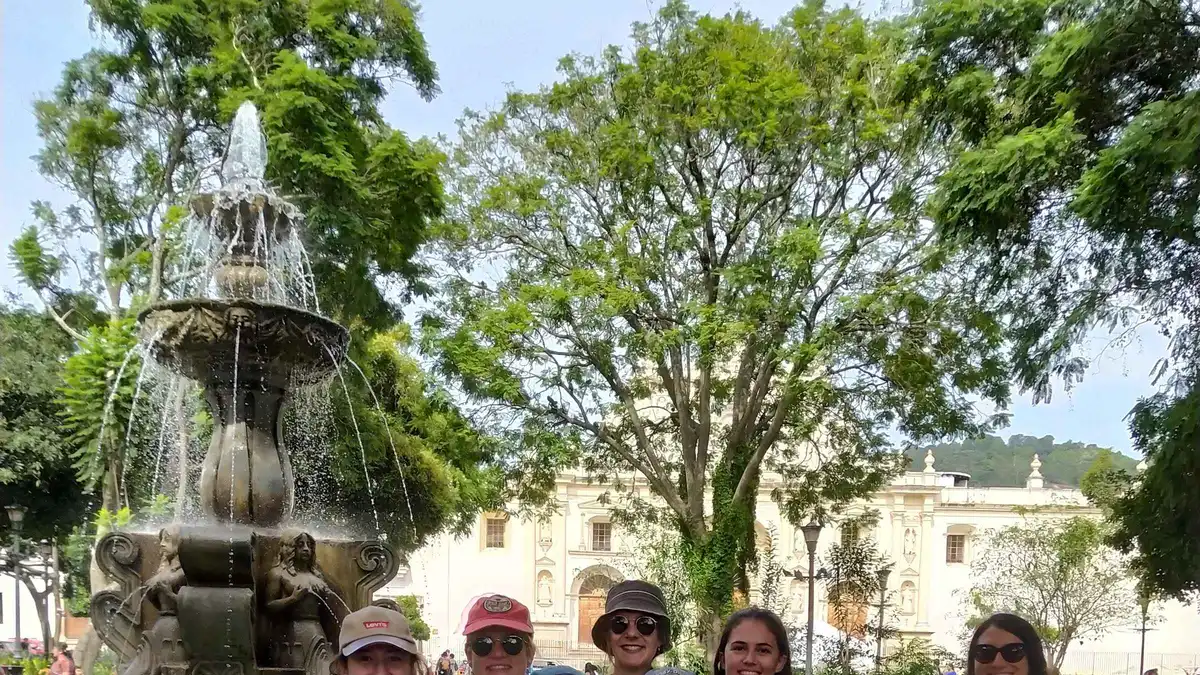 from $25
Antigua Guatemala: City Highlights Guided Walking Tour
2.5-hour small-group walk through the grid with a licensed guide; the fastest way to make the ruins and churches mean something.
Check Availability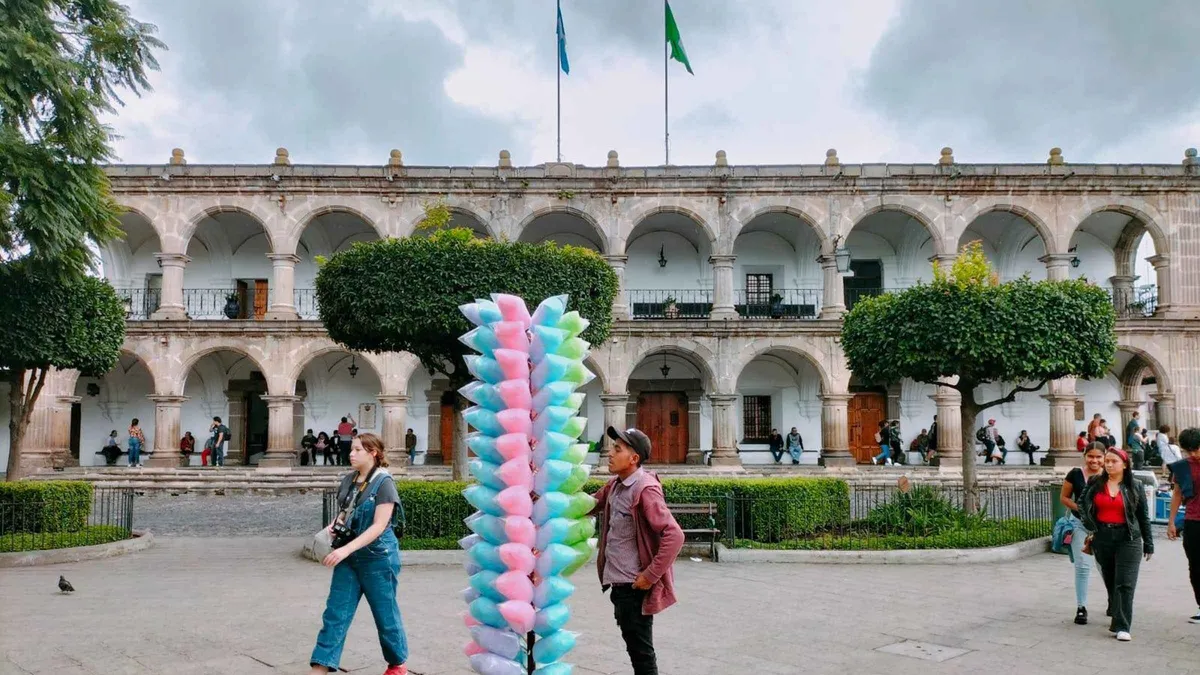 from $25
Antigua walking tour: Highlights, history, culture.
A cheaper 2.5-hour walking tour over the same ground as the top-rated one; fine if you just want orientation.
Check AvailabilityPrices, ratings and details are the platform's own. dollar figures are the listed prices — the platform bills in your account's currency.
What Las Capuchinas is
Before the ruins, know the story, because the building only makes sense once you know who built it and why.
The founding
King Felipe V approved the new Capuchin convent in 1725 and construction started in 1731. The church was consecrated in 1736 under the supervision of Diego de Porres, the leading builder of his generation in the city. That 1736 date makes it the last convent built in Antigua, a place that already had a full skyline of monasteries and convents.
The original name was Convento e Iglesia de Nuestra Señora del Pilar de Zaragoza, which almost nobody uses today. It was also the first convent in the city to stop asking a donation from new nuns, which meant poor ladies could take the habit, and the house held both of the two kinds of nuns that existed in the city, discalced and urban.
The rules that shaped the architecture
The Capuchins were cloistered, so the nuns were not meant to be seen by the outside world at all. That rule produced the building's most famous feature, the circular courtyard, a ring of cells built in a circle around a central common chamber, with underground passages. The idea was that the novices could hear mass without being seen.
The arrangement was unusual enough that Prince Wilhelm of Sweden described it when he passed through in 1920, long after the convent had fallen silent.
The afterlife
Earthquakes damaged the complex in 1751, and the Santa Marta earthquakes of 1773 ended convent life for good, with abandonment ordered by the Captain General. The twentieth century dealt two further blows, damage in 1917 and again in 1976. What stands today is the result of careful restoration rather than survival by luck.
The site is owned and protected by the Consejo Nacional para la Protección de La Antigua Guatemala, the CNPAG, and access is paid.
The circular courtyard, explained
This is the reason Capuchinas is on the itinerary, so slow down when you reach it.
What you actually look at
You stand in a circular space ringed by concentric stone arches, with the cells of the novices opening off the ring and a central common chamber at the heart. The design let cloistered nuns attend mass and hear the services without ever being visible to anyone on the outside. Underground passages connect the space, and a doorway at the courtyard edge leads down to them.
Stand in the centre and speak, and you will understand the acoustic idea behind the whole arrangement.
How to photograph it
The arches catch soft light in the morning, and the courtyards photograph best before noon, when the sun is still low enough to rake across the stone. Mid-morning brings tour groups cycling through the ring, so early is better if you want the space empty. Look down the passages too, the dark doorways give the strongest frames.
The interpretation problem
The site publishes no interpretation panels, so the story is yours to bring or a guide's to tell. That is the honest limit of a solo visit: you will see a beautiful ring of arches, but without background you will not know why it is shaped that way. The city highlights walk covers the convent system with a licensed guide, which is the cheapest way to get the full story told on site.
Is Capuchinas worth the fee?
Short answer, yes, with one honest caveat about money.
Why we say yes
This is the most legible convent ruin in Antigua, meaning you can actually read the layout and understand how the nuns lived, rather than squinting at fallen walls. The circular courtyard has no analogue anywhere else in the city. The restoration lets you walk the church, both courtyards and the ring of cells, and the underground passages give it a depth no other ruin offers.
If you are choosing a single paid convent, choose this one.
The honest caveat
Access is paid, the CNPAG owns the site, and the tariff is not published anywhere online, so you commit at the gate without knowing the figure in advance. Fees reportedly change between nationals and foreigners. Bring cash in small notes, and treat the unknown number as part of the cost of doing things the Antigua way, where several of the major sites publish no prices at all.
Who should skip it
Visitors with no interest in convent architecture should not feel obliged. If stone arches and cloister rules leave you cold, spend your time at the cathedral instead, where the ruined sections and the working parish sit side by side at the heart of the city.
How much time to give Capuchinas
No official source states a visit length, so this routing comes from walking the site. The convent unfolds in three moves, church, nuns' courtyard, circular courtyard, and the table shows what each routing commits you to.
| Routing | Time inside | What it covers | Skips / adds |
|---|---|---|---|
| Courtyard stop | about 20 minutes | The circular courtyard and one pass through the church | Skips the cells ring and the passages |
| Standard visit | 45-60 minutes | Church, both courtyards, the cells ring | The default routing |
| Two-ruin morning | about half a day | Capuchinas plus Santa Clara plus the arch | The pairing most visitors actually enjoy |
The routing
Start at the church, work through the nuns' courtyard, then save the circular courtyard for last so the acoustics land as your final impression. Forty-five minutes to an hour covers the convent and its courtyards properly. If you are tight on time, twenty minutes buys you the circular courtyard and one pass through the church, and if you are doing the full convent story, pair it with Santa Clara eight minutes south for a half-day ruin run.
The convent in dated lines
-
1725
Royal approval
King Felipe V approves the new Capuchin convent.
-
1731
Construction starts
Building work begins on the convent and church.
-
1736
The church is consecrated
Consecrated under Diego de Porres's supervision, the last convent built in the city.
-
1751
First earthquake damage
An earthquake damages the complex, which is repaired.
-
1773
The Santa Marta earthquakes
Convent life ends, abandoned by order of the Captain General.
-
1917 and 1976
Modern earthquake damage
Further damage in the modern era, in 1917 and again in 1976.
-
1920
A royal visitor describes it
Prince Wilhelm of Sweden describes the circular courtyard and its underground passages.
-
today
Owned by the CNPAG
The CNPAG owns and protects the site, access paid.
Sources: the English Wikipedia record and Wikidata Q5116750 via facts-pack-1, checked at this site's source packs.
Dos and don'ts at Capuchinas
Do
- Go early or after 15:00 to dodge the group cycle, tour groups run through the circular courtyard mid-morning.
- Bring cash in small notes for the unpromoted gate tariff, cards are not part of the plan.
- Start at the church and finish in the circular courtyard so the acoustics land last.
- Combine with Santa Clara eight minutes south for the full convent story in one morning.
- Ask the gate staff about photography rules for weddings, since shoots are common here.
Don't
- Don't expect a published price, there is none online, the gate sets it in person.
- Don't look for interpretation panels, none are documented.
- Don't plan more than an hour, the site rewards focus, not endurance.
- Don't drive, the 1a Avenida Norte corner is cobbled and busy, walk or ride a tuk-tuk at $1.31 (Q10) per in-town ride, agreed with the driver first.
- Don't skip the underground passages, a doorway at the courtyard edge leads down.
Getting there
The convent sits in the flattest, easiest part of the historic centre, a short walk from everything.
On foot from the arch
From the Santa Catalina Arch, walk north about 240 metres to the corner, which takes two to three minutes on flat ground. The arch stands on 5a Avenida Norte, and you simply follow the street north to the corner of 1a Avenida Norte.
From the main square
From Parque Central it is about five minutes on foot, straight up through the arch corridor. Everything on this side of town is walkable, so plan on foot rather than by vehicle.
By tuk-tuk
If you would rather ride, the municipal tuk-tuk tariff is $1.31 (Q10) per in-town ride. Tuk-tuks are not metered, so agree the fare first, and pay cash.
Five things most visitors do not know
A little ammunition for the road, each point sourced so you know it is not tour-guide folklore.
The list
Keep these five in your pocket and you will out-know most of the groups you meet in the courtyard.
- The convent was the LAST built in colonial Antigua, finished only 37 years before the earthquakes ended it [English Wikipedia via facts-pack-1].
- Its original name was Convento e Iglesia de Nuestra Señora del Pilar de Zaragoza [English Wikipedia].
- The circular courtyard let cloistered novices hear mass unseen, a fact recorded by a Swedish prince in 1920 [English Wikipedia].
- It is owned by the CNPAG, the conservation council for Antigua, not by the church [English Wikipedia via facts-pack-1].
- No tariff exists online, which is why this page prints the finding instead of a number [facts-pack-1 not-stated list].
Capuchinas map
Pins from the Wikidata items behind each page via facts-pack-1, except Santa Clara, whose coordinate comes from OpenStreetMap way 402712345.
What to pair with Capuchinas
The convent sits at the centre of a dense walkable grid, so pairing is easy and no transport is needed. Four stops within fifteen minutes on foot turn a single visit into a full morning, and each one adds a different layer to the story you started in the circular courtyard.
Santa Catalina Arch
The arch was built in 1693 so cloistered nuns could cross the street unseen, the same cloistering logic you just saw at Capuchinas. See the arch guide.
3 min walkSanta Clara ruins
The other paid convent ruin in the city, and the natural second half of a two-ruin morning. See the Santa Clara guide.
8 min walkLa Merced
The yellow baroque church survived the 1773 earthquakes practically unscathed because it was nearly new. See the La Merced guide.
6 min walkCerro de la Cruz
The signposted viewpoint trail gives the most iconic views of the city and takes about 20 to 30 minutes from the historic centre. See the Cerro de la Cruz guide.
15 min walk uphillCapuchinas questions
How much does it cost to visit Capuchinas?
Access is paid and the owner is the CNPAG, but no tariff is published in any official source online, so there is no number we can print honestly. Fees reportedly change between nationals and foreigners. Bring cash and expect to pay at the gate.
What are the Capuchinas opening hours?
Not stated. No official source publishes hours or closed days. Go in daylight, and aim for the morning if you want the courtyards at their best for photographs.
Where is the Convento de las Capuchinas?
Two to three minutes north of the Santa Catalina Arch, at the north end of the restored grid. GPS 14.5597, -90.7314, and the walk from the arch is flat and signposted by the street line.
What is the circular courtyard at Capuchinas?
A ring of nun's cells built in a circle around a central common chamber, with underground passages, designed so cloistered novices could hear mass unseen. Prince Wilhelm of Sweden described it in 1920. See the courtyard section.
Is Capuchinas worth visiting?
Yes. It is the most legible convent ruin in Antigua and the circular courtyard has no analogue in the city. The honest caveat is the same as everywhere in town, the tariff is not published, so you commit at the gate.
Do you need to book Capuchinas in advance?
No booking system exists for the convent, you walk in and pay at the gate. The bookable pairing is a guided city walk such as the highlights walk, which is worth reserving because it is the way to get the convent story told properly.
Capuchinas on film
Three videos that show the visit's shape before you go.
Visting the Convent of the Capuchinas in Antigua, Guatemala!
A full walk of the courtyards that shows the visit's shape.
Video: Travis MottWelcome to Antigua Guatemala - Ep. 2 Capuchinas Convent
An episode-length tour that puts the convent in its street context.
Video: IcarusCapuchin Convent
A quiet pass through the arches and the famous ring of cells.
Video: Abraham WilliamsVideos load from YouTube only when you press play.
Prices, hours and terms are set by the venue or operator and confirmed at checkout.
We may earn a commission if you book through one of our links, at no extra cost to you. Full affiliate disclosure